Skip to content
Head-to-head comparison

Strong vs Fitbod

Choose Strong when you already program your own training; choose Fitbod when you want the app to generate the session.

Pick Strong

You already program your own training

Pick Fitbod

You want the app to generate the session

Will Richards
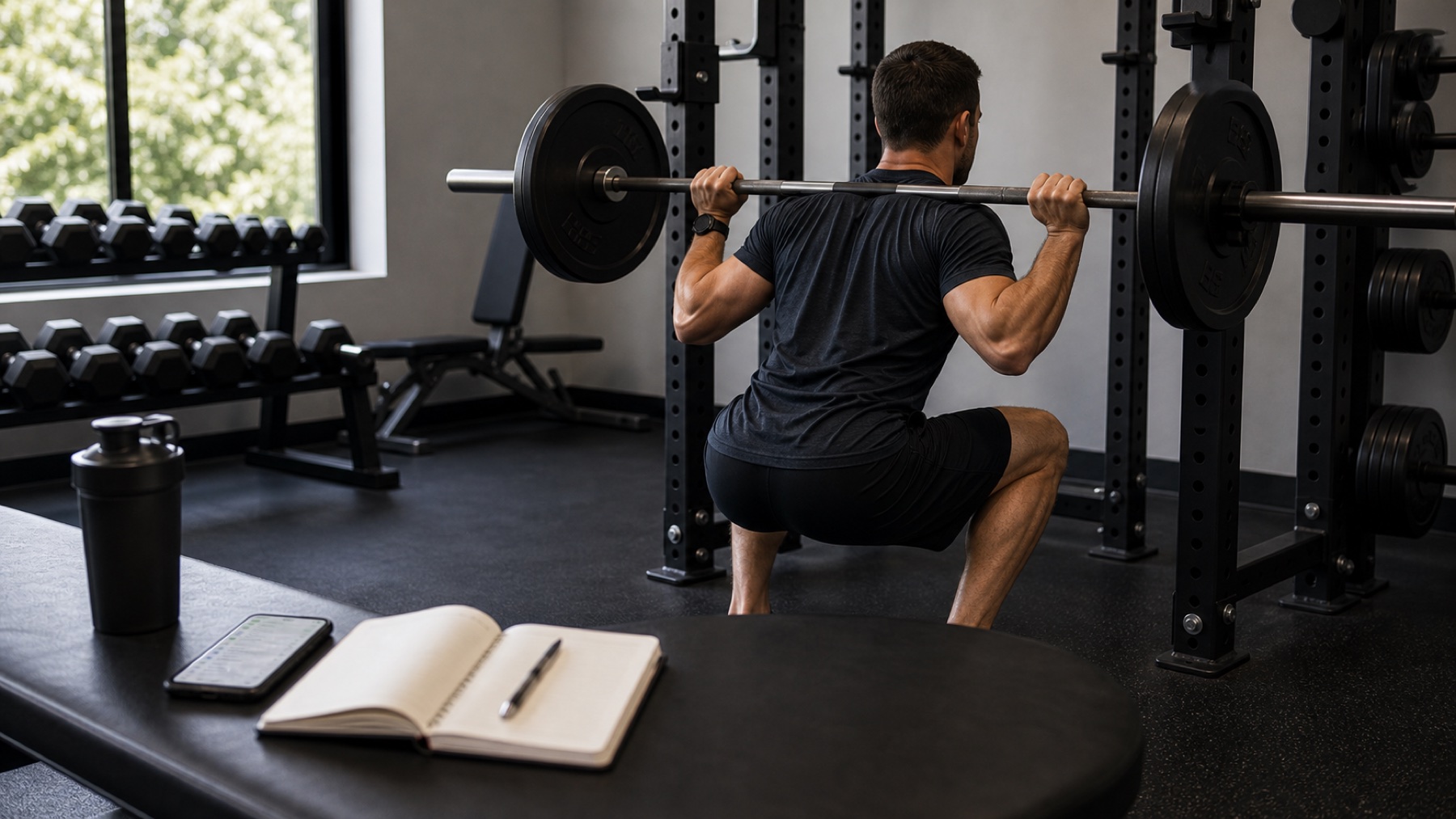
Lifter beside a phone and workout notes, illustrating the Strong and Fitbod comparison
We compare documented planning, logging, progression, pricing, and platform support. This image illustrates the training context, not a hands-on test.
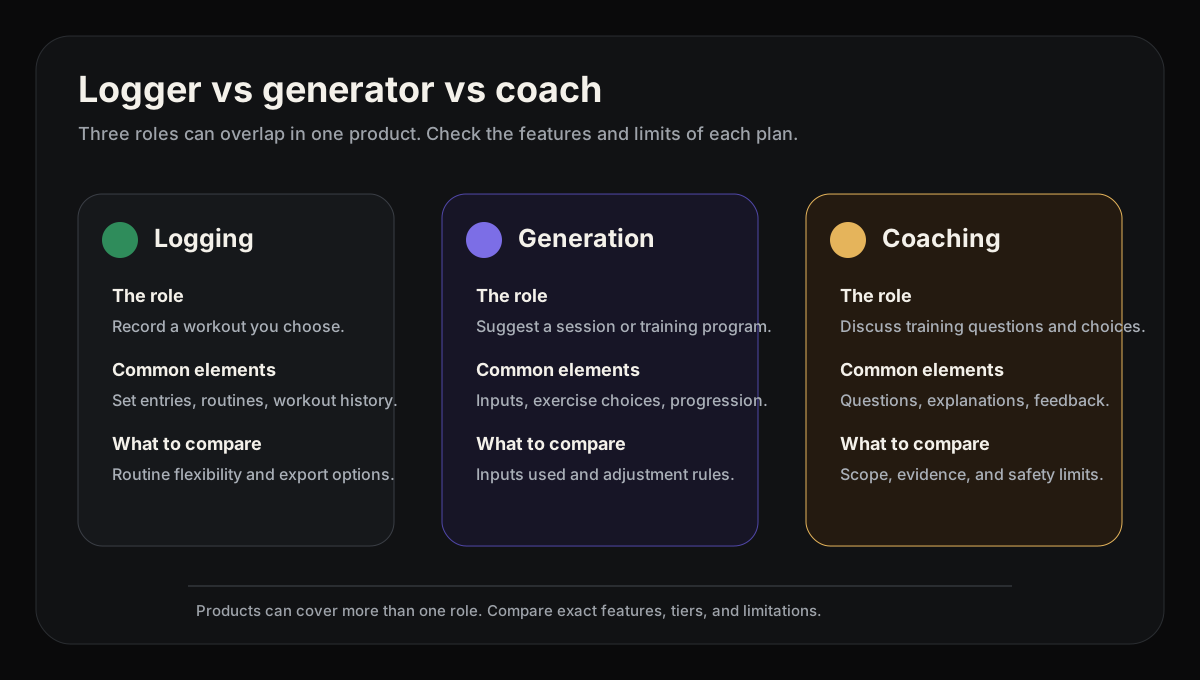
Diagram comparing manual workout loggers, workout generators, and coaching-first workout apps
This split is why some app matchups are not feature-for-feature: one app may be a logbook while another is choosing or coaching the workout.
AI workout generator

Fitbod

Generates workouts around your equipment and recovery.

Limitation: Fitbod is not ideal if you already have a plan and mainly want the cheapest manual logbook.

Best for
generated workouts around your available equipment
Price
US subscription help: $15.99/month or $95.99/year; store pricing varies by region
Platforms
iOS, Android, Apple Watch; Google Play documents Wear OS integration
Full Fitbod review

Evidence snapshot

Source-backed facts for Strong and Fitbod

Record date June 6, 2026

This table keeps volatile claims close to their sources. Pricing, platform support, watch behavior, free limits, trials, and offline wording belong to the article record dated June 6, 2026; that date is historical metadata, not a new verification. Use the linked official, store, and help pages for current details.

Official product positionStrong

A minimal logbook with documented Apple Watch support.

Fitbod

Generates workouts around your equipment and recovery.

Pricing and plan structureStrong

Free; paid Pro monthly or annual terms

Fitbod

US subscription help: $15.99/month or $95.99/year; store pricing varies by region

Free tier or trialStrong

Free version saves unlimited workouts but is limited to 3 custom routines

Fitbod

7-day trial after selecting a monthly or yearly plan, then subscription

Platforms, watch, and offlineStrong

iOS, Android, Apple Watch; offline and watch behavior should be checked from current official or store sources.

Fitbod

Fitbod lists iOS/Android and Apple Watch; Google Play documents Wear OS integration. Apple Watch requires the iPhone to start, add/swap exercises, and finalize/save workouts. Always On is unsupported and can interrupt the rest timer. App-level offline help documents local generation and logging; Focus Exercises, some history, and uncached videos need internet.

Who should choose Strong, and who should choose Fitbod

This comparison is for lifters who already know they want a workout app, but are stuck between two different workflows. The right choice depends less on the longest feature list and more on whether you want to bring your own training plan, have workouts generated, follow a library, or get coaching and progression decisions inside the app.

Strong is best for

  • You already program your own training
  • You want a minimal logging workflow with documented Apple Watch support
  • You prefer Strong's current monthly or annual Pro subscription terms

Not the right fit if

  • Choose Fitbod: You want the app to generate the session
  • Choose Fitbod: You train in gyms with variable equipment
  • Choose Fitbod: You are happy paying a subscription for convenience

Strong vs Fitbod: feature comparison

Strong compared with Fitbod
FeatureStrongFitbod
Writes your programSelf-entered routines; generation not establishedGenerated sessions from training inputs
Chat coachNot established by linked documentationNot established by linked documentation
Auto progressive overloadNot established by linked documentationGenerated targets use training history; exact progression rules are not established here
Generated workoutsNot established by linked documentation
Program librarySaved routines; public program library not establishedGenerated and saved workouts
Apple Watch appCompanion: iPhone required to start, add or swap exercises, and finalize/save workouts
Offline loggingPhone-independent Apple Watch logging is confirmed; network-offline behavior and later sync are not confirmed in checked official sourcesLocal workout generation and logging; Focus Exercises, some history, and uncached videos need internet
Free tierLimited; unlimited workouts but 3 custom routines7-day trial, then paid subscription
Social / communityStore descriptions document workout and routine sharing; a social feed is not establishedNot established by linked documentation

Feature evidence

Platform, pricing, watch, free-tier, and workout-generation claims are linked to the official sources below. Where those sources do not directly confirm a feature, the page uses conservative wording such as partial, limited, or not the core workflow.

Category by category

We split the decision into the moments that matter most in strength training. A workout app can look polished on the home screen and still be frustrating when you are trying to log a hard set, change an exercise, or decide whether to add weight next week.

Workout generation

Fitbod documents suggested sessions using equipment, recent training, and recovery inputs. Strong's captured descriptions establish logging and saved routines, but do not establish workout generation. Compare Fitbod when you want proposed sessions and Strong when its documented logging tools meet your existing plan; this is not a measured convenience or control ranking.

Winner

Fitbod

Minimal logging

Strong's official and store materials emphasize saved routines, previous performance, and focused set logging, while Fitbod's materials emphasize generated sessions. Strong is the clearer documented fit for manual-first training, but the supplied evidence does not establish a comparative speed or reliability winner.

Assessment

Depends

Apple Watch

Strong and Fitbod both have captured Apple Watch support, but the supplied documentation does not establish which app is faster or more reliable on the wrist. Check each app's current watch workflow and compatibility against how you train.

Assessment

Depends

Equipment handling

Fitbod is stronger when your equipment changes, because it can generate a workout around what you have available. That matters in hotel gyms, home gyms, crowded commercial gyms, or weeks where you need substitutions. Strong can store any routine or swap you choose, but the decision and re-planning work is still yours.

Winner

Fitbod

Value

Strong's captured App Store and help material document free workout logging plus monthly and annual Pro terms. Fitbod's captured help material documents a trial followed by a subscription. The better value depends on whether generated sessions replace planning effort; no lifetime Strong offer is established by the supplied evidence.

Assessment

Depends

Questions to answer before you switch

Use the documented workflows above to decide which app fits your training. These are decision criteria from the linked product material, not results from a hands-on test.

Setup

How does a session begin?

Check whether Strong and Fitbod start from saved routines, generated sessions, or both, then compare that documented setup with how you normally train.

During a workout

What does the log support?

Review set entry, rest timers, exercise swaps, and previous-performance context in the linked product material. This page does not report a hands-on logging-time or reliability result.

When plans change

Who makes the next decision?

Separate manual logging, generated workouts, and progression guidance. Treat each feature description as a documented product claim, not evidence of a particular training outcome.

Over time

What are the current limits?

Recheck current price, routine limits, data export, platform support, and watch behavior at the official links before committing your training history to either app.

The better fit can change by user. A self-programmed lifter may prefer a focused logbook, while someone who wants planning help may value generated sessions or Trainer guidance more than a larger chart library.

Workout history, export, pricing, and platform support are practical switching costs. Check those details at the linked official sources, especially when the two workflows are otherwise close.

Strengths and trade-offs

Neither app is automatically better for every lifter. The useful question is which documented trade-off best matches the way you train.

Strong

Strengths

  • Saved routines, set entry, and workout history
  • Apple Watch logging with or without the phone
  • Plate calculator in Pro
  • Free workout history with a three-routine cap

Trade-offs

  • Tight free-tier routine cap
  • Programming and coaching guidance are not established by the linked documentation

Fitbod

Strengths

  • Equipment-aware workout proposals
  • Exercise selection can reflect available gym equipment
  • Documented local workout generation and logging offline
  • Public iOS and Android store listings

Trade-offs

  • Generation documented; conversational coaching not established
  • Focus Exercises and some history/media features need a connection

Pricing

Pricing changes often; treat this as a snapshot.

Strong

Free

Free version saves unlimited workouts but is limited to 3 custom routines

Fitbod

US subscription help: $15.99/month or $95.99/year

7-day trial after selecting a monthly or yearly plan, then subscription

The article record is dated June 6, 2026; that date is historical metadata, not a new source verification. App Store, Google Play, and official pricing pages can show different regional pricing or temporary promotions, so use the linked official sources below for current paid-plan details.

How we compared them

This is a source-based control-versus-convenience comparison, not a hands-on timing or reliability test. Strong's documented materials emphasize routines, logging, history, and Apple Watch support; Fitbod's emphasize generated workouts, equipment context, and subscription convenience. We do not infer a lifetime purchase option or training outcome that the supplied evidence does not establish.

We also keep app categories separate. Strong is best for lifters who want a quiet, manual logging workflow, while Fitbod is best for generated workouts around your available equipment. That means the winner can change depending on whether you care most about logging, generated sessions, Apple Watch, social motivation, or coaching.

Logging workflow

How the documented workflow covers starting a workout, entering sets, editing mistakes, and checking history.

Planning help

Whether the app helps decide the workout, adapts around equipment, or leaves programming fully to the user.

Progression clarity

How clearly the app documents next-step decisions, progression rules, or the limits of its planning help.

Value

How much useful strength-training workflow is available before paying, and what paid plans unlock.

Platform evidence

How clearly official sources document phone, watch, Android/iOS, and offline boundaries.

This matchup uses documented workflow trade-offs instead of a numerical editorial total. Pricing, platform support, and free-tier limits should be rechecked from official sources before purchase.
Product screenshots

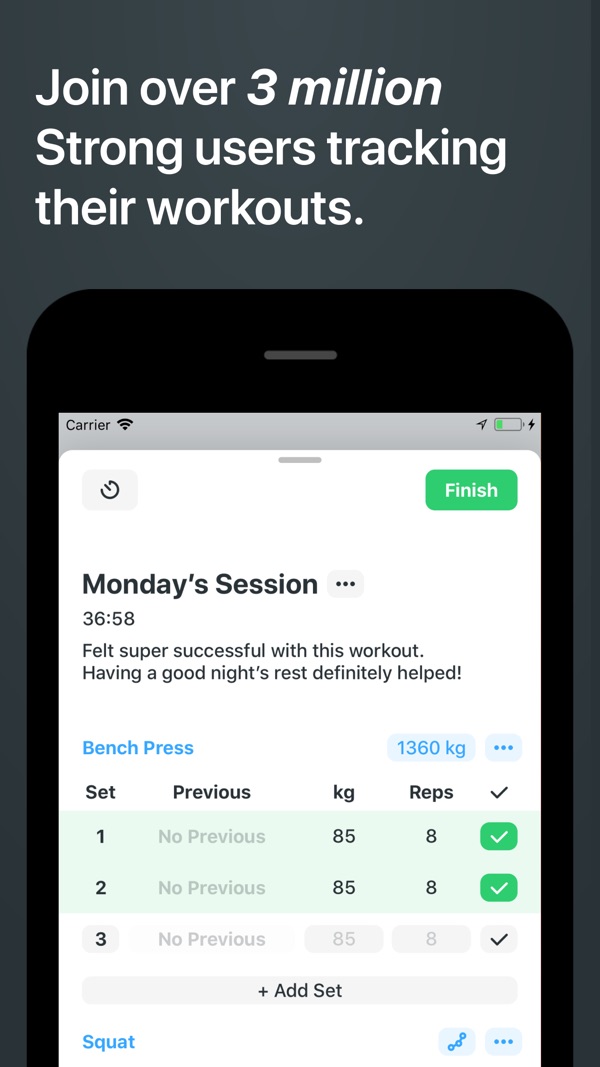
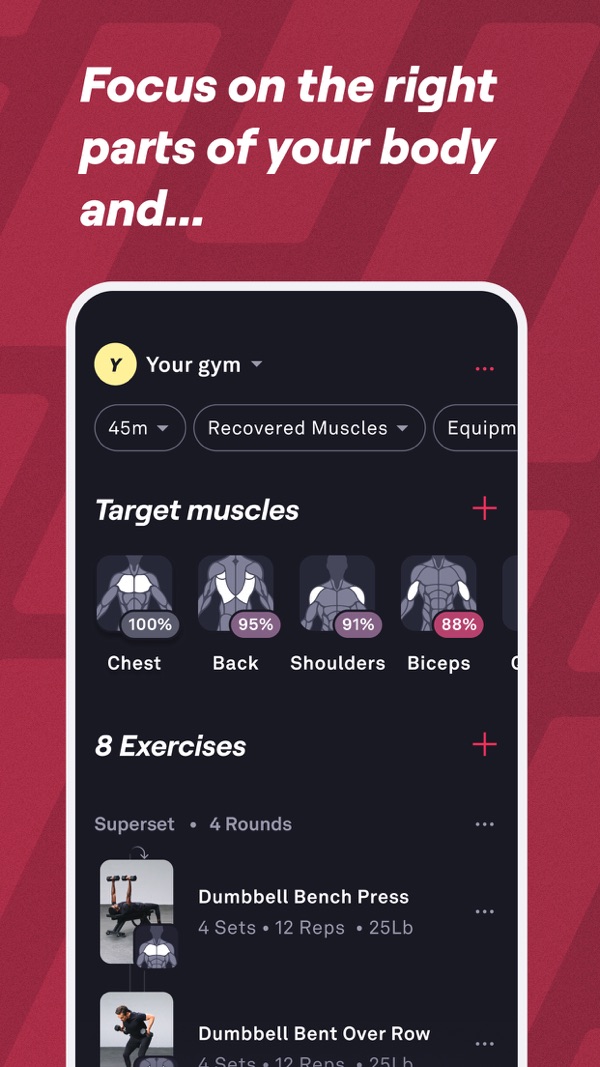
These product images illustrate the workflows discussed above and may show earlier versions. They are not evidence of a hands-on test of either competitor.

Strong publisher screenshot showing bench-press weight and rep entries
Strong's store illustration shows a session log with weight, reps and completion checks. The advertised user count is not verified here.
Fitbod publisher screenshot showing target muscles and a workout exercise list
The session view includes target muscles and exercises. Displayed recovery percentages are app estimates, not physiological measurements.

Why you should trust us

This comparison separates documented product claims from editorial judgment. We use the linked official and store material to compare setup, logging, progress review, exercise changes, planning, pricing limits, and platform scope.

We do not claim hands-on timing, watch reliability, or long-term testing here. The most honest recommendation is the documented workflow that fits your needs, with volatile details checked again at the official source before purchase.

Separate first-party beta note

Handler is not part of this public matchup

Strong and Fitbod are compared here on their own documented workflows. Handler is shown separately only so invited testers can review the current product scope without turning a private beta into a public competitor recommendation.

Handler is our own product. It is in an invited iOS TestFlight beta, so it is scored separately and carries no public store rating or independent-review evidence. Primary test build: workout logging, AI coach chat, program setup, history, progress review. Apple Watch is in development, and offline is a test-build workflow. This is a first-party scope note for invited testers, not a public recommendation or performance guarantee.

Read first-party beta notes

Other apps worth comparing

If the choice still feels close, these apps cover adjacent needs: a quieter logbook, a data-heavy tracker, or a coaching-first workflow.

Frequently asked questions

Is Strong better than Fitbod?
Strong is positioned as a simple logbook with Apple Watch support, while Fitbod is positioned around generated sessions. Choose Strong when you want to bring more of the plan yourself; choose Fitbod when generated workouts justify its subscription model.
What is the difference between Strong and Fitbod?
Strong is a minimal logbook with documented apple watch support. Fitbod is generates workouts around your equipment and recovery.
Which is cheaper, Strong or Fitbod?
Strong is listed as free; paid pro monthly or annual terms, and Fitbod is listed as us subscription help: $15.99/month or $95.99/year; store pricing varies by region. Confirm current regional terms on the linked official pages.
Is there a better alternative to Strong and Fitbod?
Compare options such as Strong, Hevy, Fitbod, Alpha Progression, Boostcamp, and JEFIT by use case. Handler is covered separately for invited testers, not as a public alternative. Handler is our own product. It is in an invited iOS TestFlight beta, so it is scored separately and carries no public store rating or independent-review evidence. Primary test build: workout logging, AI coach chat, program setup, history, progress review. Apple Watch is in development, and offline is a test-build workflow. This is a first-party scope note for invited testers, not a public recommendation or performance guarantee.

Sources

  1. 01Strong official site (product positioning and Apple Watch support)strong.app
  2. 02Strong PRO help article (Pro subscription, free-version access, and regional price caveat)help.strongapp.io/article/132-strong-pro
  3. 03Strong App Store listing (iOS, Apple Watch, free routine limit, and US Pro pricing reference)apps.apple.com/us/app/strong-workout-tracker-gym-log/id464254577
  4. 04Strong Google Play listing (Android availability)play.google.com/store/apps/details
  5. 05Fitbod membership page (membership reference; not a verified checkout snapshot)app.fitbod.me
  6. 06Fitbod subscription help (subscription plans, 7-day trial, and regional pricing caveat)help.fitbod.me/hc/en-us/articles/360004904714-How-to-Subscribe-to-Fitbod
  7. 07Fitbod trial help (7-day trial, auto-renewal, and post-trial access limits)help.fitbod.me/hc/en-us/articles/30542136101527-How-the-Trial-Works
  8. 08Fitbod FAQs (billing, features, integrations, trial, and platform-pricing caveats)fitbod.me/faqs/
  9. 09Fitbod App Store listing (iOS, Apple Watch, ratings, and in-app purchase reference)apps.apple.com/us/app/fitbod-gym-fitness-planner/id1041517543
  10. 10Fitbod Google Play listing (Android availability and user-review context)play.google.com/store/apps/details
  11. 11Fitbod Apple Watch help (watch support)help.fitbod.me/hc/en-us/articles/360006499194-Apple-Watch
  12. 12Fitbod offline help (offline-use limitations)help.fitbod.me/hc/en-us/articles/360006572594-Can-I-use-Fitbod-without-an-internet-connection
  13. 13Garage Gym Reviews Fitbod review (Further-reading reference only; not used to establish product facts or rankings)garagegymreviews.com/equipment/fitbod
  14. 14Lifehacker Fitbod review (Further-reading reference only; not used to establish product facts or rankings)lifehacker.com/health/fitbod-app-review
  15. 15Fitbod subreddit (community discussion link; not captured as review evidence)reddit.com/r/fitbod/
  16. 16JEFIT Progressive Overload System (official description of performance inputs and automated load recommendations)jefit.com/ai-workout-tracker
  17. 17JEFIT Adaptive Plan (marketing advertises generated blocks and weekly adaptation, while the FAQ confirms Stage 1 load progression and calls Stage 2 adaptation forthcoming; this conflict leaves generated-block availability unresolved)jefit.com/ai-workout-tracker/adaptive-plan
  18. 18JEFIT Watch (official Apple Watch and Wear OS workout logging documentation)jefit.com/watch
  19. 19JEFIT rollout FAQ (distinguishes live Strength Engine from staged mesocycle adaptation)jefit.com/support/faq
  20. 20JEFIT Elite pricing page (free and Elite pricing reference)jefit.com/elite
  21. 21JEFIT download page (product positioning and platform links)jefit.com/download-app
  22. 22JEFIT App Store listing (iOS, Apple Watch, and current US in-app purchase reference; monthly listing was $12.99 when checked)apps.apple.com/us/app/jefit/id449810000
  23. 23JEFIT Google Play listing (Android availability)play.google.com/store/apps/details

Invited TestFlight beta · iPhone-first

Still comparing workout apps?

Use the app reviews and best-app guides to compare logbooks, generated workouts, program libraries, and coaching-first tools before you choose.

Keep comparing