How to Do the Barbell Bench Press
The barbell bench press is the primary upper-body pressing lift, building the chest, front delts, and triceps through a loaded horizontal press.
Training scope: General exercise information, not an individual technique assessment. Editorial technique and programming guidance, not medical advice. Use qualified coaching or clinical care for pain, injury history, or movement-specific restrictions.
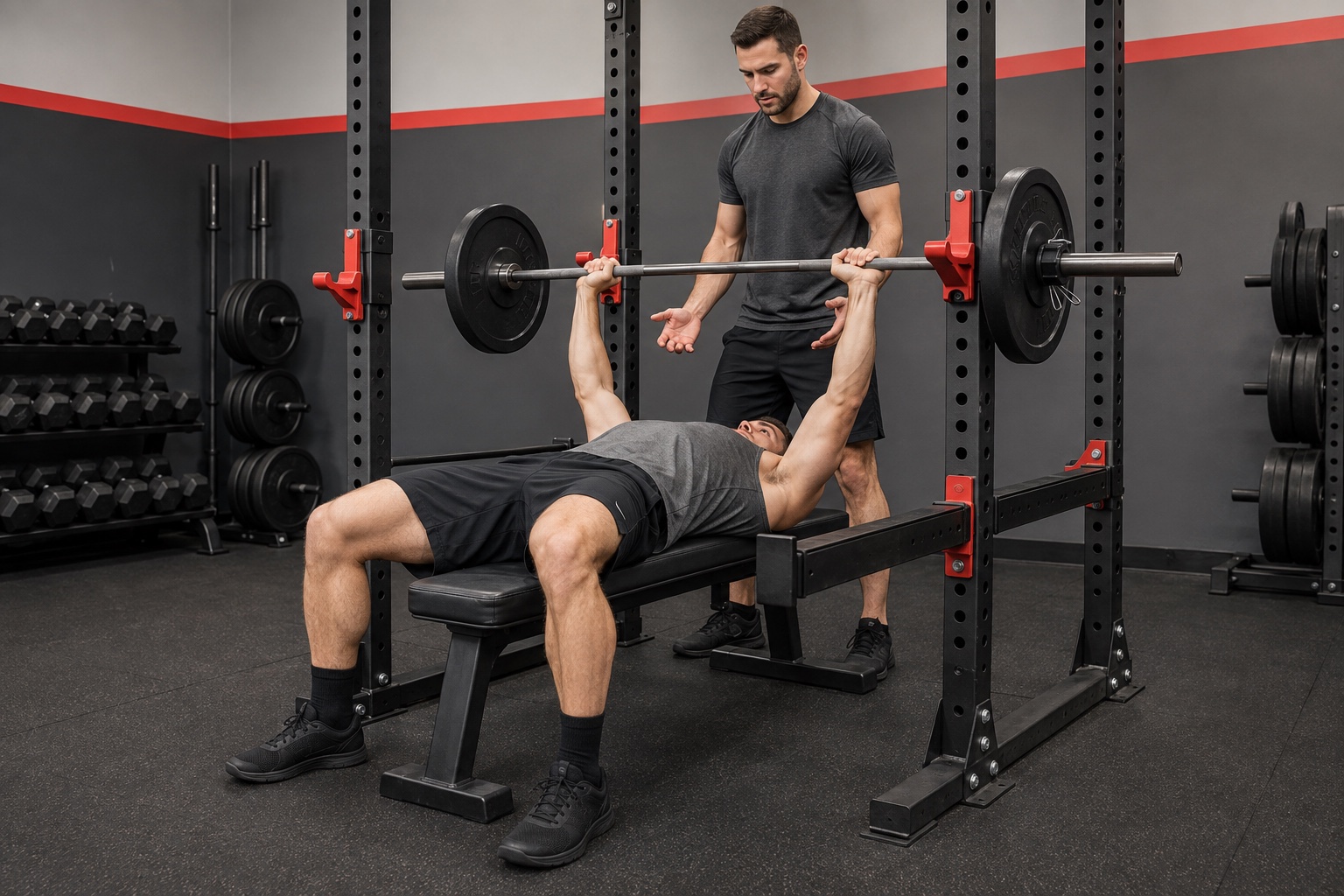
Primary muscles
Chest
Secondary muscles
Front delts, Triceps
Equipment
Barbell
Level
Beginner
Type
Compound
Typical reps
Examples: 3-6 for strength practice, 6-12 for muscle-focused sets
The barbell bench press trains the chest, front shoulders, and triceps. A stable bench setup gives you a repeatable horizontal press that is straightforward to load and log.
Start with a stable setup and a load you control. Upper-back support and planted feet can reduce wobbling, but no particular setup guarantees pain-free lifting or protection from injury.
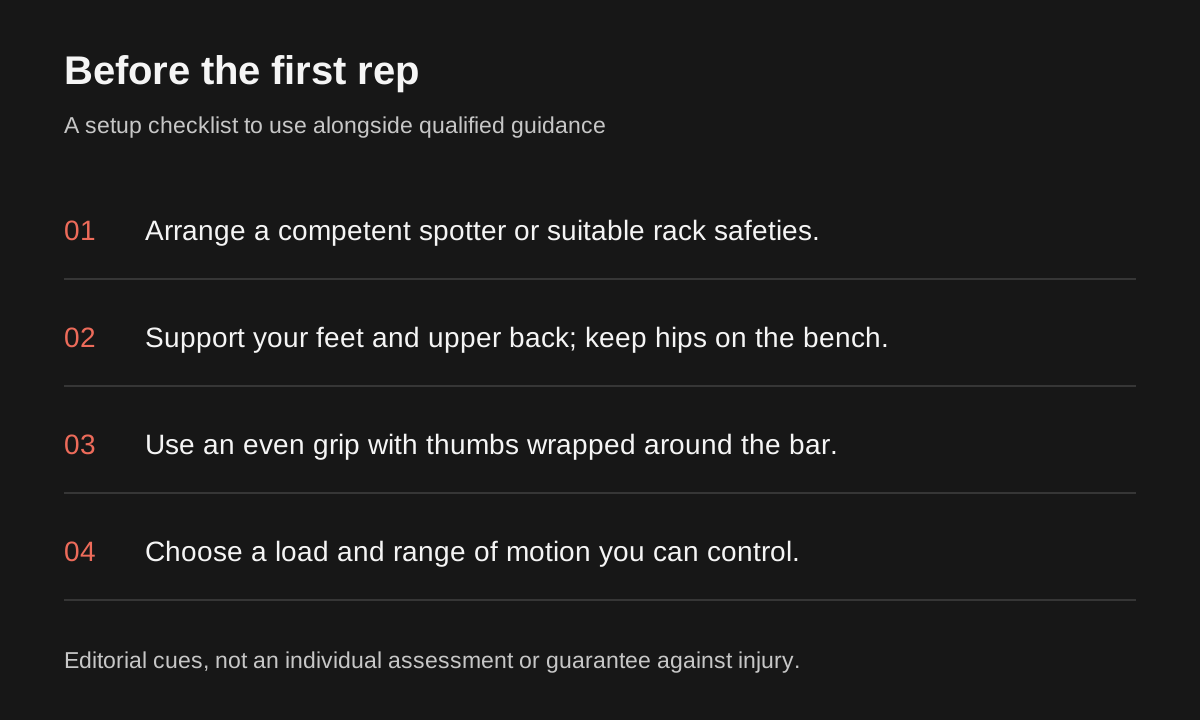
Direct answer: how to bench press properly
Set your eyes under the bar, settle your shoulder blades back against the bench, support your feet, and take an even, thumb-wrapped grip. Lower toward the chest through a controlled, pain-free range, then press to a balanced position over your shoulders. The bar may travel slightly back as it rises; do not aim it at your face or the rack hooks.
Useful checkpoints for a repeatable press:
- Stable upper back before the bar leaves the rack.
- Wrists stacked over forearms instead of bent far back.
- A comfortable elbow angle rather than a forced tuck or flare.
- A consistent bottom position, at or above the chest as appropriate.
- A controlled press where hips stay on the bench.
If you cannot keep those points consistent, reduce the load before adding more weight.
Cleveland Clinic’s exercise physiologists describe a range that varies with anatomy, grip, control, and joint comfort. Stronger by Science’s bench guide provides the coaching context for setup and the upward-and-back bar path.
Setup checklist
| Setup point | What to do | Why it matters |
|---|---|---|
| Eyes | Start with eyes under or slightly behind the bar | Makes unracking easier without wasting energy |
| Shoulder blades | Pull them down and together | Creates a stable base for the shoulder joint |
| Feet | Keep them planted and push into the floor | Adds whole-body tension and prevents wobbling |
| Grip | Use a grip that keeps forearms near vertical at the bottom | Improves force transfer and wrist position |
| Bar path | Lower toward the chest, then press back over the shoulders | Gives you a repeatable path without reaching toward the rack |
Your arch does not need to be extreme. The point is to create upper-back tension and a stable ribcage, not to turn the lift into a flexibility contest.
Muscles worked
The bench press primarily trains the pectorals, with the front delts and triceps assisting. Grip width, elbow angle, arch, and touch point can shift the emphasis, but the movement is still a horizontal press.
Use the barbell bench when you want a repeatable lift that is easy to load and measure. Use dumbbells, push-ups, or machines when shoulder comfort, range of motion, or equipment access makes those a better fit.
Programming examples
These are editorial examples, not a personalized plan or sets to combine into one workout. Warm up with lighter practice sets, choose a load you can control, and rest until you can repeat the setup. The ranges overlap: there is no sharp boundary between strength and muscle-building work.
| Goal | Editorial starting point | How to use it |
|---|---|---|
| Beginner technique | 2 to 3 sets of 6 to 10 | Leave several reps in reserve and keep the bottom position consistent |
| Strength | 3 to 5 sets of 3 to 6 | Keep the same spotter or safety setup you use for all barbell sets |
| Hypertrophy | 3 to 4 sets of 6 to 12 | Add reps first, then small weight jumps |
| Secondary chest work | 2 to 3 sets of 8 to 12 | Count other pressing toward the session’s workload before adding more |
Bench pressing is usually easiest to progress when you keep the exercise stable for several weeks. If your grip, arch, tempo, and touch point change every session, the log becomes harder to interpret.
Healthdirect recommends learning with light resistance and increasing gradually. It does not prescribe these bench-specific set and rep examples.
Alternatives and variations
| Alternative | What changes | What to check |
|---|---|---|
| Dumbbell bench press | Each hand holds a separate weight | Available weight increments and a controlled setup |
| Push-up | Bodyweight pressing with hands on the floor or an elevated surface | A variation that fits the intended effort |
| Machine chest press | The machine guides the movement | Seat height, grip, and a comfortable path |
| Incline bench press | The bench angle changes | Reassess load and comfort instead of copying flat-bench numbers |
| Floor press | Upper arms meet the floor at the bottom | A controlled descent and a suitable unrack or hand-off |
Choose the variation that lets you train hard without shoulder pain and progress it consistently.
When to use a spotter or safeties
Arrange a competent spotter before barbell sets, not just max attempts. Agree on lift-off and a clear help cue. Where rack safeties are available, ask qualified gym staff to set and check them for your bench and setup; a written guide cannot confirm that equipment is correctly adjusted.
Leaving reps in reserve is not a substitute for a failed-rep plan. If neither a spotter nor suitable safeties is available, choose an alternative such as push-ups or a machine chest press. Cleveland Clinic includes securing a spotter in its bench setup guidance.
The practical answer
Short answer
Use the barbell bench press when you want a compound lift that trains chest with clear progressive overload. It is most useful when you can keep the setup repeatable, move through a controlled range of motion, and add load or reps without changing the form.
The lift belongs in a program, not as a random challenge. Start with a load you can control, keep a few clean reps in reserve, and progress only when the working sets look the same from first rep to last rep.
Claim-source map
Technique references and editorial choices
We separate sourced exercise facts from editorial coaching judgment so the guide is easier to verify, update, and cite.
Setup and technique
The setup checklist, step-by-step cues, bar path, and range-of-motion guidance are practical cues based on the technique references.
- Stronger by Science: bench setup(strongerbyscience.com/how-to-bench/) - Setup, grip, and scapular-position coaching; not proof of injury prevention.
- Cleveland Clinic: bench press form(health.clevelandclinic.org/bench-press-form) - Muscles worked, thumb-wrapped grip, spotter, and range adjusted to anatomy, control, and comfort.
- Stronger by Science: bench ascent(strongerbyscience.com/how-to-bench/) - Upward-and-back press cue, with adjustment for shoulder comfort.
Muscles worked
Primary and secondary muscle claims come from exercise-library and biomechanics sources, then are translated into plain English.
- Cleveland Clinic: bench press form(health.clevelandclinic.org/bench-press-form) - Muscles worked, thumb-wrapped grip, spotter, and range adjusted to anatomy, control, and comfort.
- Stronger by Science: shoulder flexion(strongerbyscience.com/how-to-bench/) - Bar path over the shoulders and leg-drive mechanics.
Sets, reps, and progression
Programming ranges are coaching defaults. Use them as starting points, then adjust load, volume, and frequency based on recovery and rep quality.
Safety and troubleshooting
Pain, regression, and mistake guidance is editorial coaching support, not diagnosis or medical advice.
- Stronger by Science: bench setup(strongerbyscience.com/how-to-bench/) - Setup, grip, and scapular-position coaching; not proof of injury prevention.
- Stronger by Science: bench ascent(strongerbyscience.com/how-to-bench/) - Upward-and-back press cue, with adjustment for shoulder comfort.
- Healthdirect: strength training for beginners(healthdirect.gov.au/strength-training-for-beginners) - Starting light, gradual loading, and avoiding painful exercise; not an exact bench prescription.
Fit check
Who this is for
This section is meant to help you decide whether the exercise belongs in your program, not just whether you can perform it once. A good fit means the movement matches your goal, equipment, current skill level, and ability to progress it without losing form.
Best fit
Lifters who want to build chestwith a movement that can be tracked and progressed over time.
Not ideal if
You cannot set up the movement consistently yet, feel joint pain during warm-ups, or need a simpler variation to learn the pattern first.
How to progress
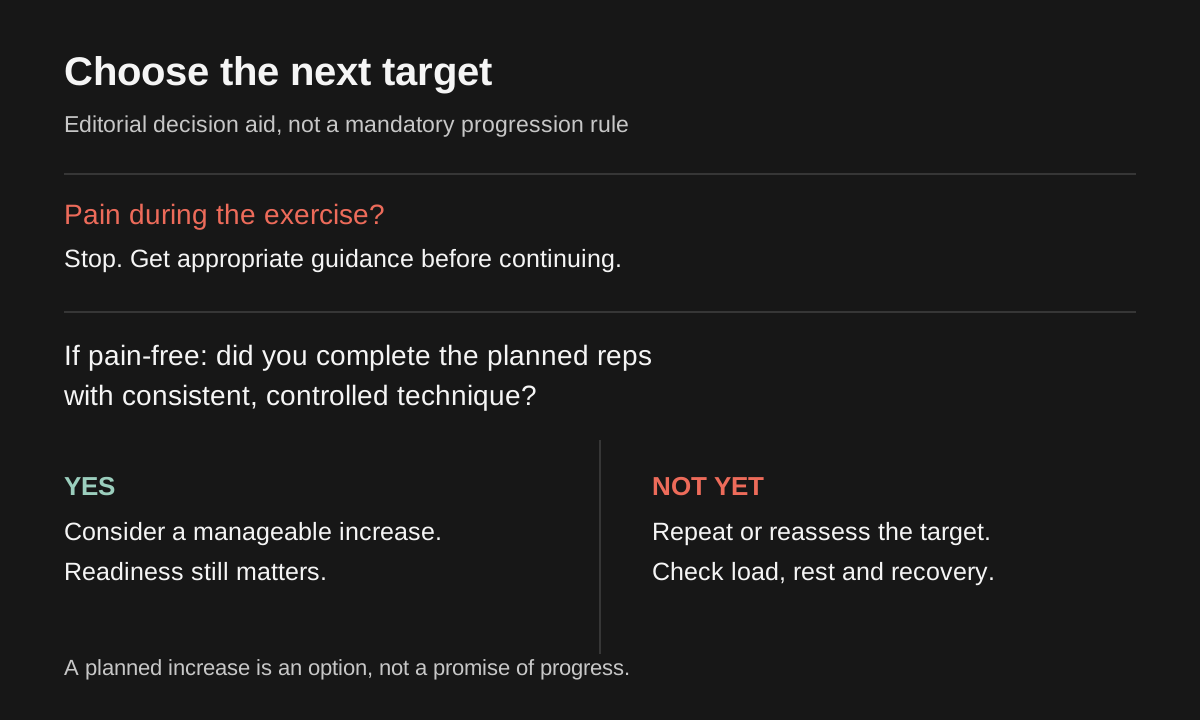
Add reps first, then small weight jumps once every set stays controlled. If form changes, hold the load and earn cleaner reps before increasing again.
Technique
How to Do the Barbell Bench Press
- 01
Arrange a competent spotter or correctly set rack safeties before lifting. Lie with eyes under the bar, feet supported, and a comfortable back arch.
- 02
Grip the bar evenly with thumbs wrapped around it and set your shoulder blades back against the bench. Start around shoulder-width or a little wider and adjust for control and comfort.
- 03
Unrack the bar and hold it over your shoulders with straight arms.
- 04
Lower toward your chest with control. Choose a comfortable elbow angle and stop at a pain-free depth, which may be above the chest.
- 05
Press up to a balanced position over your shoulders, keeping your upper back stable and hips on the bench.
Programming
How to program the Barbell Bench Press
The barbell bench press can be a main lift or an accessory within a program. Choose the load, repetitions, and sets together. Higher repetitions do not automatically mean an easier session or lower recovery cost; effort and total work also matter.
A simple progression is to keep the same weight until all working sets reach the top of the rep range with clean technique, then add the smallest practical jump next time. This keeps progressive overload tied to execution rather than ego.
Troubleshooting
Common barbell bench press mistakes
- Forcing a fixed elbow angle or touch point despite discomfort or loss of control.
- Bouncing the bar off the chest instead of controlling the descent.
- Letting the shoulder blades come unpinned, losing a stable base.
- Lifting the hips off the bench to grind out a heavy rep.
Coach cues
Form tips to get more from it
- Pull the bar apart as if bending it to lock in your upper back.
- Drive your feet into the floor for a stable, connected press.
- Use a competent spotter or correctly adjusted safeties, including for lighter sets.
- Keep wrists stacked over your forearms, not bent back.
References
Sources and freshness
General technique context from first-party coaching and health-education references. Programming numbers are editorial examples, not individualized prescriptions or evidence of a completed human safety review.
Sources
- 01Cleveland Clinic: bench press form (Muscles worked, thumb-wrapped grip, spotter, and range adjusted to anatomy, control, and comfort.)health.clevelandclinic.org/bench-press-form
- 02Stronger by Science: bench setup (Setup, grip, and scapular-position coaching; not proof of injury prevention.)strongerbyscience.com/how-to-bench/
- 03Stronger by Science: bench ascent (Upward-and-back press cue, with adjustment for shoulder comfort.)strongerbyscience.com/how-to-bench/
- 04Stronger by Science: shoulder flexion (Bar path over the shoulders and leg-drive mechanics.)strongerbyscience.com/how-to-bench/
- 05Healthdirect: strength training for beginners (Starting light, gradual loading, and avoiding painful exercise; not an exact bench prescription.)healthdirect.gov.au/strength-training-for-beginners