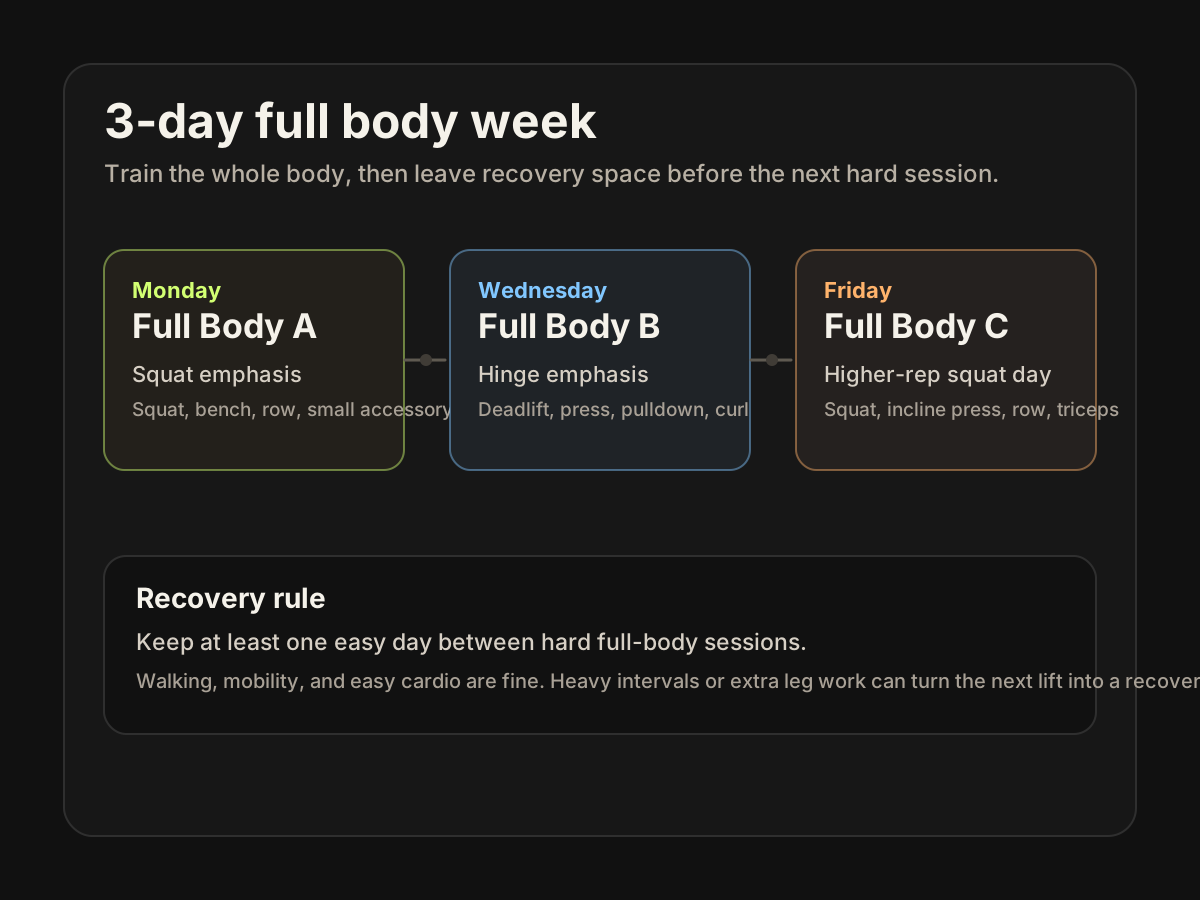
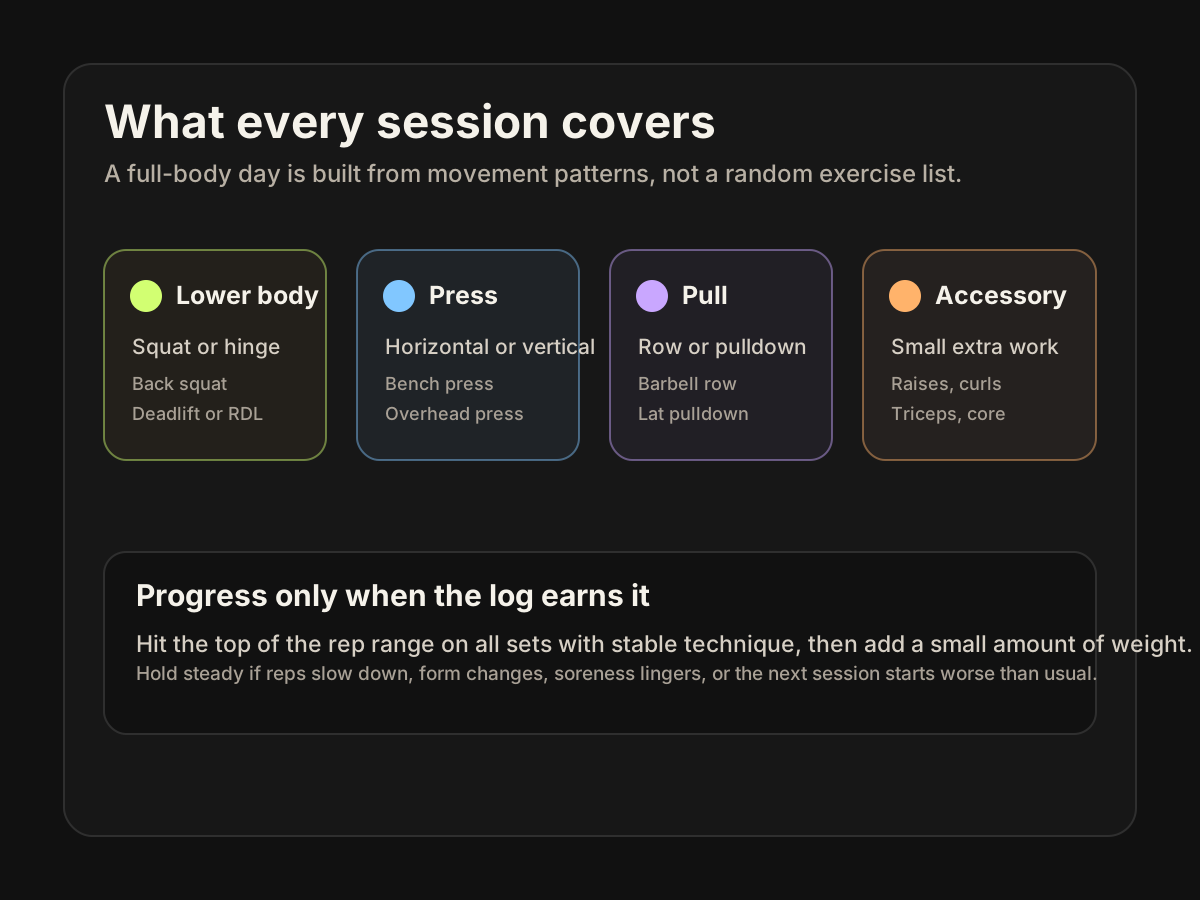
A full-body routine can fit strength training into a few weekly visits. Each session includes lower-body work, a press, a pull, and a small accessory block. Repeating the main patterns makes it easier to learn the exercises and compare sessions.
Three days is one convenient schedule, not a requirement or a proven best choice. A 2024 meta-analysis found similar strength and muscle-growth outcomes for split and full-body routines when volume was matched.
Three-day workout
Train Monday, Wednesday, and Friday, or use another set of non-consecutive days.
| Full Body A |
Working sets x reps |
Rest |
| Back squat |
3 x 5-8 |
3 min |
| Bench press |
3 x 5-8 |
3 min |
| Barbell row |
3 x 8-10 |
2 min |
| Lateral raise |
2 x 12-15 |
1-2 min |
| Full Body B |
Working sets x reps |
Rest |
| Conventional deadlift |
3 x 5 |
3 min |
| Overhead press |
3 x 6-8 |
2 min |
| Lat pulldown |
3 x 10-12 |
2 min |
| Biceps curl |
2 x 10-12 |
1-2 min |
| Full Body C |
Working sets x reps |
Rest |
| Back squat |
3 x 8-10 |
2 min |
| Incline dumbbell press |
3 x 8-12 |
2 min |
| Seated cable row |
3 x 10-12 |
2 min |
| Triceps pushdown |
2 x 12-15 |
1-2 min |
The final accessory on each day is optional. If you are brand new, two working sets per lift, or one controlled deadlift set, may be a more manageable introduction than the full table. Add work only when the current amount is recoverable.
“Full body” describes the broad session structure, not direct training for every muscle every day. Chest pressing appears on A and C; hinging appears on B; there is no direct calf exercise in the base plan. If comprehensive twice-weekly coverage is your priority, use the two-day menu below or add appropriate work while reducing other sets.
Choose your starting loads
Pick weights that leave a few possible reps beyond the target at the end of each set. Week one is for finding repeatable loads, not testing maximum strength.
Use a light bar, dumbbells, or a machine if the barbell version is not manageable. Keep the higher-rep C-day squat load separate from A-day squats: the different rep target will usually need a lighter weight.
Mayo Clinic recommends gradual loading with consistent technique and warming up before weights. Mayo Clinic technique guidance
Start with 5 to 10 minutes of easy movement, then lighter rehearsal sets for each main lift. For an established 100 kg squat work weight, a light bar followed by 40, 60, and 80 kg is one possible ramp. It is not a beginner starting-weight recommendation.
Rest and progression
Use the listed rests as starting times. Extend them when breathing or fatigue would compromise your next set. Rest days can include walking or other comfortable activity; account for demanding sport or cardio when assessing your total workload.
For rep ranges, use double progression:
- Build reps at the same load until all sets reach the top of the range with consistent technique.
- Try the smallest manageable increase.
- Remain within the rep range at the new weight; use a smaller jump or return to the old load if you fall below it.
The fixed 3 x 5 deadlift has a separate rule: increase only after all three sets of five are controlled with some effort left. Otherwise repeat the load or reduce it. If three work sets are too much, reduce the sets instead of grinding through them.
For example, rows at 10, 10, 10 can earn an increase; 10, 9, 8 is a reason to keep building reps. A missed target without pain does not require changing the whole program.
If you can train only two days
Two days can still produce useful progress. Fewer visits do not necessarily mean slower results; the exercises, workload, effort, and consistency also matter.
For two non-consecutive days, use this separate menu rather than simply dropping C from the three-day plan:
| Exercise role |
Day 1 |
Day 2 |
| Squat pattern |
Goblet squat or back squat |
Split squat or leg press |
| Hip hinge |
Dumbbell Romanian deadlift |
Dumbbell Romanian deadlift |
| Chest press |
Dumbbell bench press |
Push-up or machine chest press |
| Pull |
Cable row |
Pulldown |
| Shoulders |
Dumbbell shoulder press |
Dumbbell shoulder press |
| Calves |
Standing calf raise |
Standing calf raise |
| Core |
Plank |
Plank |
Start with 1-2 sets of 8-12 on the lifts and 20-30 seconds for planks. Use assistance or an easier push-up angle to make the rep target manageable. These are editorial starting targets, not an instruction to cram three days of work into two. Build the workload gradually and use the same rep-range progression.
If you want four days
You can spread full-body work across four sessions, but start by distributing the existing weekly sets rather than adding an entire extra workout. On consecutive days, emphasize different movements and avoid making both sessions equally demanding.
If that becomes awkward to organize, upper/lower gives each session a clearer focus. Four days is a scheduling option, not a required next level.
Home and dumbbell substitutions
| Pattern |
Home option |
Progression |
| Squat |
Goblet squat or split squat |
Add reps, then resistance |
| Hinge |
Dumbbell Romanian deadlift |
Add reps, then resistance |
| Chest press |
Push-up or dumbbell floor press |
Add reps; change leverage or load when ready |
| Pull |
One-arm dumbbell row or securely anchored band row |
Add reps, then resistance |
| Accessories |
Dumbbell raises, curls, extensions |
Small load changes after reaching the rep target |
Substitutions are related exercises, not exact equivalents. Learn the movement and start a fresh load record. If your dumbbells become too light, use a more challenging variation or a higher rep range. Pauses and slower reps change the task, but making an exercise feel harder is not automatically equivalent to lifting more weight.
When to reduce work or stop
If several sessions show declining performance and persistent fatigue, reduce sets or use a lighter week. You do not need a fixed deload calendar.
Pain is different from ordinary effort or manageable muscle soreness. Stop an exercise that causes pain; persistent or worsening symptoms warrant qualified assessment. Do not use a deload as permission to keep repeating a painful movement.
A useful training record is simple: exercise, load, actual reps, and a brief effort or technique note. Look for trends over several sessions, not a new personal record every time.