Skip to content
Workout program

Upper Lower Split

A practical 4-day upper lower split for strength and muscle, with exercises, sets, reps, progression rules, beginner caveats, recovery guidance, and sources.

Will RichardsFounder and editorial lead; source and editorial review, not medical review10 min read

Training scope

This is a general training template, not an individually assessed program. Editorial training guidance, not medical advice. Adjust exact exercises, sets, reps, rest periods, load jumps, and deload timing around recovery, technique, pain, and qualified coaching or clinical guidance.Editorial standards and reviewer context.

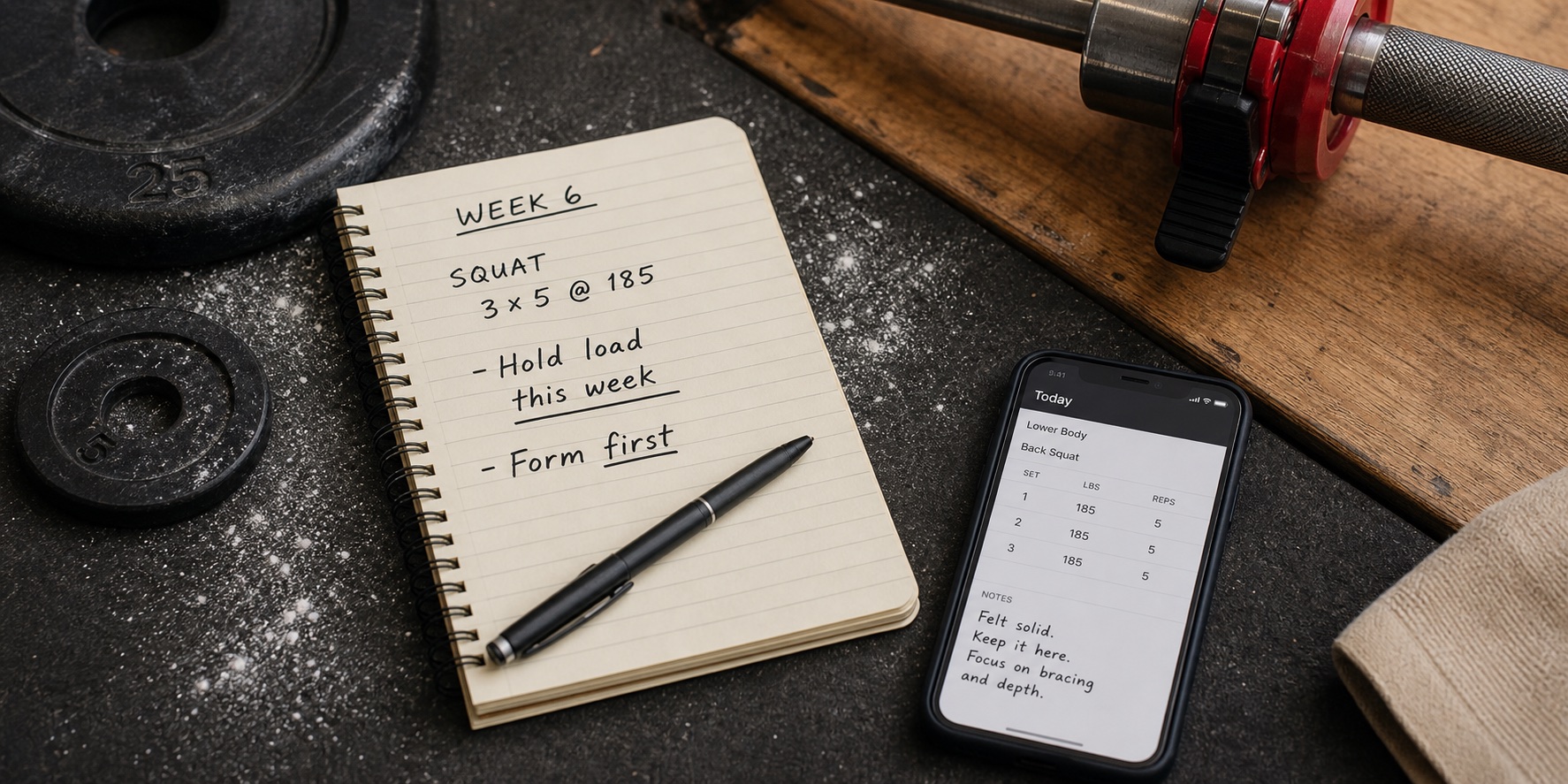
Notebook and phone recording squats beside gym equipment

Short answer

A four-day upper/lower split alternates Upper A, Lower A, rest, Upper B, Lower B, then two recovery days. It gives two upper- and two lower-body sessions, with room for heavier lifts and higher-rep work. Most large muscle groups get work on both relevant days; this specific template has direct calf work only on Lower A.

Goal

Strength and muscle

Level

Intermediate

Schedule

4 days/week

Length

Ongoing

Equipment

Barbell, dumbbells, machines

An upper/lower split organizes the week into two upper-body and two lower-body sessions. It can suit lifters who want focused workouts without training six days a week.

The split itself is not inherently more strength-focused than PPL or better for muscle growth than full body. A 2024 meta-analysis found similar results for split and full-body routines when training volume was matched. Schedule, preference, and how you distribute the work are good reasons to choose between them.

Copy the four-day schedule

Day Session Main work
Monday Upper A Bench, row, overhead press
Tuesday Lower A Squat, Romanian deadlift
Wednesday Rest Easy activity as desired
Thursday Upper B Incline press, pull-up or pulldown, row
Friday Lower B Deadlift, split squat, leg curl
Weekend Rest Recover before the next week

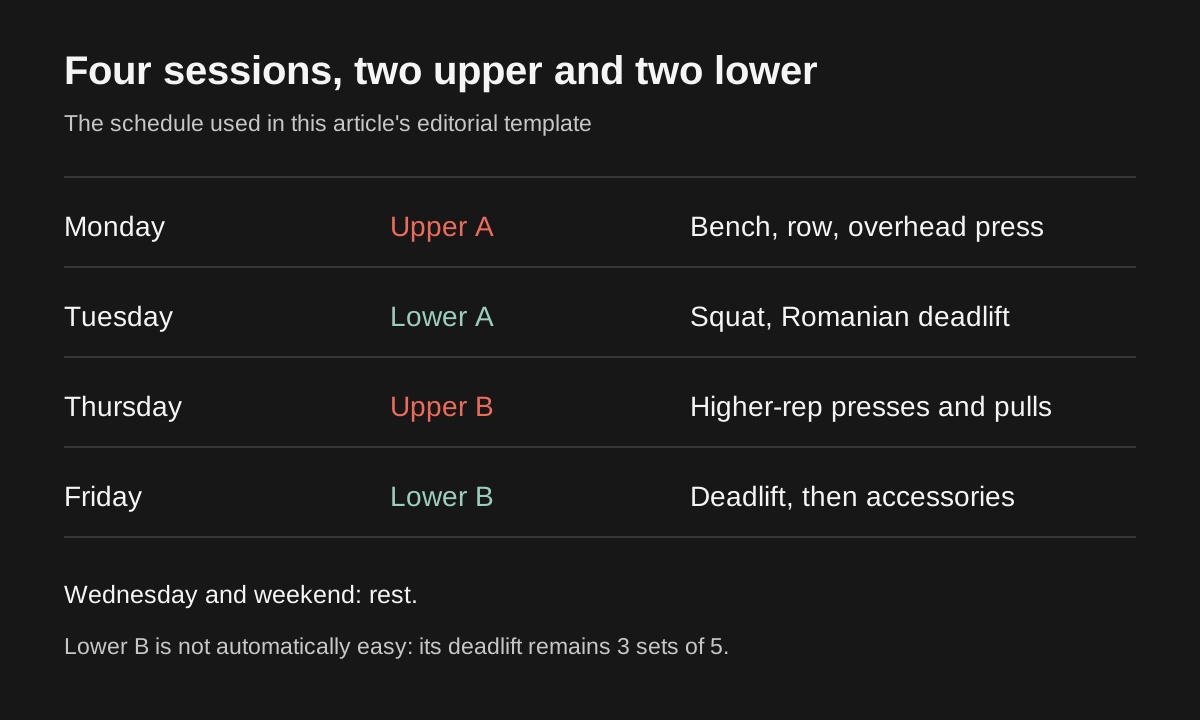
A days use lower reps on the main lifts. B days mostly use higher reps, but Lower B still begins with a fixed 3 x 5 deadlift. Do not treat that day as automatically easier.

The exercises

Upper A Sets x reps Rest
Bench press 4 x 5-6 3 min
Barbell row 4 x 6-8 3 min
Overhead press 3 x 6-8 3 min
Lat pulldown 3 x 10-12 2 min
Triceps pushdown 3 x 10-15 1-2 min
Lower A Sets x reps Rest
Back squat 4 x 5-6 3 min
Romanian deadlift 3 x 8-10 2 min
Leg press 3 x 10-12 2 min
Standing calf raise 4 x 12-15 1-2 min
Upper B Sets x reps Rest
Incline dumbbell press 4 x 8-12 2 min
Pull-up or pulldown 4 x 8-12 3 min
Lateral raise 4 x 12-15 1-2 min
Seated cable row 3 x 10-12 2 min
Biceps curl 3 x 10-12 1-2 min
Lower B Sets x reps Rest
Conventional deadlift 3 x 5 3 min
Bulgarian split squat 3 x 8-12 per leg 2 min
Leg curl 3 x 12-15 1-2 min
Hanging leg raise 3 x 10-15 1-2 min

These are working sets after warm-ups. Extend rest when needed to repeat the setup and target reps. The listed rests are starting times, not deadlines.

Check the weekly workload

The template includes eight chest-pressing sets and fourteen row/pulldown/pull-up sets weekly. Lower-body work includes ten squat, leg-press, and split-squat sets plus hinges and leg curls. Compound exercises also contribute indirect work, so these counts are not a precise measure of each muscle’s stimulus.

This is a substantial starting menu, not a research-validated optimum. If it is much more than your current plan, start with two sets per exercise or remove an accessory. Keep the amount that supports progress and recovery.

Most large muscle groups receive work on both relevant days, but direct calf work appears only on Lower A. To give calves two direct sessions without adding weekly sets, split the four calf sets into two on each lower day. Direct abdominal work is also concentrated on Lower B.

Progression rules

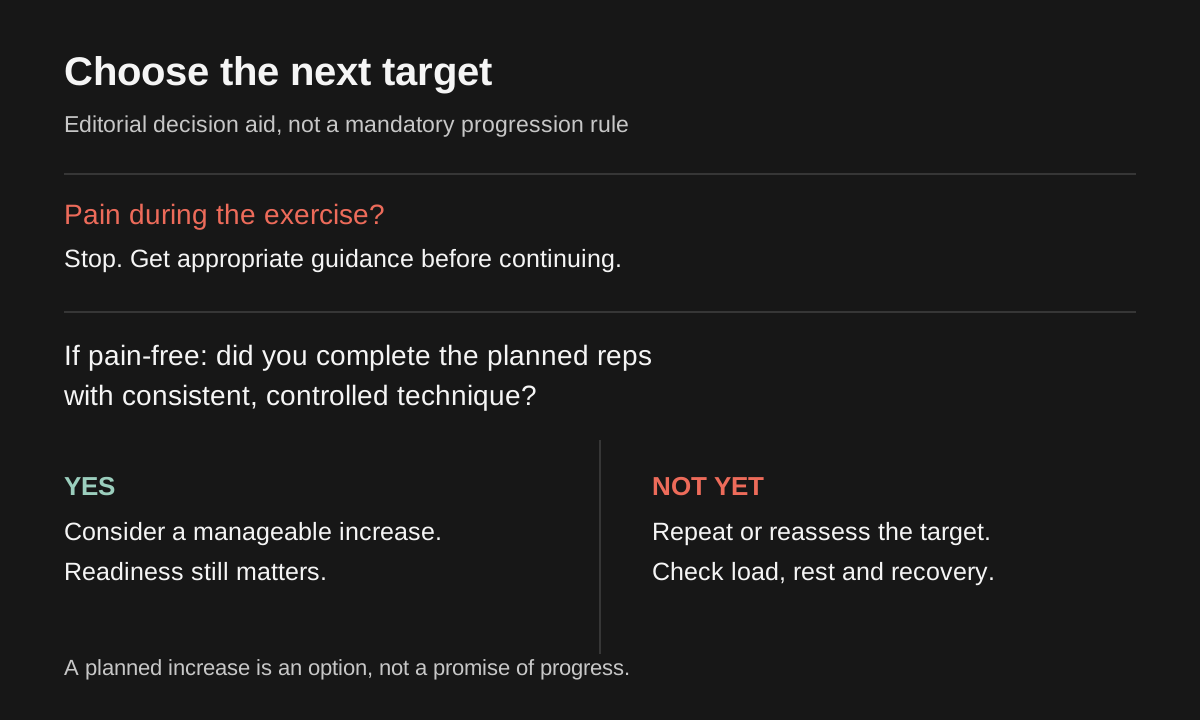
Use the same basic rule on both A and B days: build reps inside the listed range, then try a small load increase once all sets reach the top with consistent technique.

Last result Next session
Bench 4 x 6 with some effort left Try a small increase and aim for at least 5 reps per set
Incline press 12, 12, 10, 9 Keep the load and build reps
Deadlift 3 x 5 completed with control Try a small increase; there is no higher rep target to reach
New load drops you below the range Use a smaller increase or return to the previous load
Repeated performance decline Review rest and recovery; reduce workload before adding more

Keep roughly 1-3 reps in reserve on most compound sets as a practical effort target. You do not have to test failure to estimate that exactly.

Manage lower-body fatigue

Squats, hinges, split squats, and leg presses can add up. If the second lower day consistently suffers, first try removing a leg-press set on Lower A or reducing deadlift work to one or two controlled sets on Lower B.

Do not simply move heavy deadlifts onto a day that already has squats and Romanian deadlifts. If you rearrange the hinge, replace existing work instead of adding it.

A lighter week can help when fatigue persists across sessions. There is no required deload date. One poor workout is a reason to investigate, not proof that the whole split has stopped working.

Substitutions have different roles

Original Possible alternative What changes
Bench press Dumbbell or machine chest press Setup and load progression
Back squat Goblet squat, hack squat, or leg press Balance, loading, and movement demands
Pull-up Assisted pull-up or pulldown How resistance is adjusted
Romanian deadlift Dumbbell RDL or cable pull-through Hip-hinge loading and available resistance
Heavy deadlift A lighter hinge variation Less practice of the specific floor pull

A leg curl trains knee flexion. It can retain hamstring work when you reduce hinging, but it does not replace the hip-hinge pattern or train the same movement skill. Set a new load and rep range when changing exercises; do not transfer the old weight automatically.

Three-day and beginner options

For three days, alternate Upper/Lower/Upper and Lower/Upper/Lower across two weeks. Each half then gets three sessions in fourteen days, not two sessions every calendar week.

A full-body routine is another option when you want more frequent practice within fewer visits. You do not need to graduate from one split to another. Pick the structure that fits the time and workload you can maintain.

Before adding load, learn each exercise’s setup and use lighter warm-up sets. Stop painful exercise; persistent or worsening symptoms need qualified assessment. Mayo Clinic technique guidance

Use a notebook or logger to record actual reps and loads. The point is to make the next decision easier, not to meet a data requirement before training can work.
Evidence map

Research context and editorial choices

Broad training evidence does not establish every detail of a workout plan. The specific programming choices below remain editorial guidance unless the article links a source for that exact point.

Schedule and training frequency

The weekly layout is an editorial example. Mayo Clinic advises avoiding training the same muscles on consecutive days; that guidance does not validate this entire program or its suitability for an individual.

  • Mayo Clinic: weight training technique(mayoclinic.org/healthy-lifestyle/fitness/in-depth/weight-training/art-20045842) - Practical guidance on starting gradually, technique, warm-ups, and stopping painful exercise.

Sets, reps, rest, and workout order

The specific exercises, order, sets, reps, and rest ranges are editorial examples, not a protocol validated by the cited studies.

    Progression, stalls, and deloads

    Load jumps, repeated-weight decisions, resets, and deload percentages should be treated as starting rules rather than universal standards.

      Substitutions, safety, and recovery

      Exercise swaps, pain caveats, and recovery checks are coaching guidance; use individual coaching or clinical help for injury-specific decisions.

      • Mayo Clinic: weight training technique(mayoclinic.org/healthy-lifestyle/fitness/in-depth/weight-training/art-20045842) - Practical guidance on starting gradually, technique, warm-ups, and stopping painful exercise.

      Who this is for

      Use this section to sanity-check whether the program matches your training age, schedule, equipment, and recovery. A good program is not just a list of exercises; it is a repeatable week you can run long enough for progression to matter.

      A good fit if

      • Intermediates who can train 4 days a week
      • Lifters who want both strength and size in one plan
      • People who find a 6-day split hard to recover from or fit in

      Maybe not if

      • Absolute beginners who still need to learn the main lifts
      • People who can only commit to 1 to 2 sessions a week
      • Lifters who recover poorly from heavy lower-body work twice per week

      The weekly schedule

      Upper Lower Split4 days/week · Ongoing
      MondayUpper AStrength focus: bench, row, press
      TuesdayLower AStrength focus: squat, hinge
      ThursdayUpper BHypertrophy focus: higher reps
      FridayLower BDeadlift, then higher-rep accessories

      The workouts

      Sets and reps for each training day. Treat these as Handler editorial programming examples, not as universal standards or a study-tested protocol. Adjust loads, rest times, and substitutions to recovery, technique, equipment, and coaching context. Stop an exercise that causes pain.

      Upper A

      Strength focus
      ExerciseSets × repsRest
      Barbell bench pressWorking sets after warm-ups; reduce volume if this exceeds your current workload.4 × 5-63 min
      Barbell row4 × 6-83 min
      Overhead press3 × 6-83 min
      Lat pulldown3 × 10-122 min
      Triceps pushdown3 × 10-151-2 min

      Lower A

      Strength focus
      ExerciseSets × repsRest
      Barbell back squatWorking sets after warm-ups; reduce volume if this exceeds your current workload.4 × 5-63 min
      Romanian deadlift3 × 8-102 min
      Leg press3 × 10-122 min
      Standing calf raise4 × 12-151-2 min

      Upper B

      Hypertrophy focus
      ExerciseSets × repsRest
      Incline dumbbell pressHigher-rep upper-body work.4 × 8-122 min
      Pull-up4 × 8-123 min
      Lateral raise4 × 12-151-2 min
      Seated cable row3 × 10-122 min
      Biceps curl3 × 10-121-2 min

      Lower B

      Deadlift and higher-rep accessories
      ExerciseSets × repsRest
      Conventional deadliftUse this as a starting template; reduce hinge load or volume if the second lower day suffers.3 × 53 min
      Bulgarian split squat3 × 8-122 min
      Leg curl3 × 12-151-2 min
      Hanging leg raise3 × 10-151-2 min
      Four-day upper lower schedule with Upper A Lower A Upper B Lower B and recovery days
      This example has two upper and two lower sessions; the Lower B deadlift remains 3 sets of 5.
      Editorial decision guide for considering an increase or repeating a training target
      Review completed reps, technique and recovery before changing a target.

      How to progress

      1. R–01

        On strength days (A), add weight when you hit the top of the rep range on the main lifts.

      2. R–02

        Use double progression on rep ranges. For the fixed 3x5 deadlift, add a small amount only after all 15 controlled reps; otherwise repeat or reduce the load.

      3. R–03

        A days emphasize lower reps. B-day presses and accessories use higher reps; the Lower B deadlift remains a fixed 3x5 lift.

      4. R–04

        Keep 1 to 3 reps in reserve on most compound sets so the second weekly session stays productive.

      5. R–05

        Use a lighter week when performance drops, soreness lingers, or both upper or both lower sessions feel flat.

      Exercise substitutions

      These are alternatives to assess when equipment or a movement does not suit you, not identical replacements. Adjust the load and prescription to the new exercise.

      Barbell bench press

      Dumbbell bench pressMachine chest press

      Barbell back squat

      Front squatHack squatLeg press

      Pull-up

      Lat pulldownAssisted pull-up

      Romanian deadlift

      Dumbbell Romanian deadliftCable pull-through

      Common mistakes

      • Forcing extra variation when the existing exercises and rep ranges are working.
      • Treating the hypertrophy day like a max-out session and stalling recovery.
      • Skipping direct hamstring or calf work, leaving lower days quad-dominant.
      • Ignoring repeated fatigue or declining performance while continuing to add work.

      How to track this program

      Recording working sets helps you follow the progression rules and compare sessions. Log what you actually lift, then compare week to week so you know when to add weight, add reps, or hold steady.

      You can run this with a notebook or any logger. Handler is the product we are building around this style of logged progression; until the public product pages change, use the program rules here as the source of truth.

      Quick answers and evidence

      The short version before the full source list

      This recap keeps the practical recommendation, the most common reader questions, and the source basis in one place. Use the full article above for details and the source list below for freshness notes.

      Program takeaway

      A four-day upper/lower split alternates Upper A, Lower A, rest, Upper B, Lower B, then two recovery days. It gives two upper- and two lower-body sessions, with room for heavier lifts and higher-rep work. Most large muscle groups get work on both relevant days; this specific template has direct calf work only on Lower A.

      • GoalStrength and muscle
      • LevelIntermediate
      • Schedule4 days/week
      • LengthOngoing

      Source basis

      Common questions

      Is an upper lower split good for building muscle?

      Yes. Two upper and two lower sessions give you room to distribute weekly work. This template trains most large muscle groups on both relevant days, but direct calf work appears only once. Progress depends on the work and recovery, not the split name alone.

      Upper lower or push pull legs?

      Upper/lower fits four days neatly; repeated PPL fits six days or a rolling schedule. Both can prioritize strength or muscle growth through exercise selection, loading, and volume.

      Can I run upper lower 3 days a week?

      Yes, by rotating Upper, Lower, Upper one week and Lower, Upper, Lower the next. Each half then gets three sessions across two weeks, not two every week. A full-body plan is another option for three available days.

      How heavy should the strength days be?

      Work in the 5 to 8 rep range on the main lifts with 1 to 2 reps in reserve. Heavy enough to drive strength, not so heavy that form breaks down.

      Sources and freshness

      This is an authored four-day template. Split-versus-full-body research informs the scheduling comparison, not the exact weekly dose. Set counts, rep ranges, rest times, and fatigue adjustments are practical choices.

      Sources

      1. 01Ramos-Campo et al. 2024: split versus full-body training (Abstract of a 14-study meta-analysis: similar strength and muscle-growth outcomes when training volume was equated.)pubmed.ncbi.nlm.nih.gov/38595233/
      2. 02Mayo Clinic: weight training technique (Practical guidance on starting gradually, technique, warm-ups, and stopping painful exercise.)mayoclinic.org/healthy-lifestyle/fitness/in-depth/weight-training/art-20045842

      Frequently asked questions

      Is an upper lower split good for building muscle?
      Yes. Two upper and two lower sessions give you room to distribute weekly work. This template trains most large muscle groups on both relevant days, but direct calf work appears only once. Progress depends on the work and recovery, not the split name alone.
      Upper lower or push pull legs?
      Upper/lower fits four days neatly; repeated PPL fits six days or a rolling schedule. Both can prioritize strength or muscle growth through exercise selection, loading, and volume.
      Can I run upper lower 3 days a week?
      Yes, by rotating Upper, Lower, Upper one week and Lower, Upper, Lower the next. Each half then gets three sessions across two weeks, not two every week. A full-body plan is another option for three available days.
      How heavy should the strength days be?
      Work in the 5 to 8 rep range on the main lifts with 1 to 2 reps in reserve. Heavy enough to drive strength, not so heavy that form breaks down.
      Is upper lower better than full body?
      Neither is inherently better. Upper/lower can distribute work into shorter focused sessions; full body uses fewer weekly visits. Compare schedules and weekly workload rather than assuming one split produces better results.

      Invited TestFlight beta · iPhone-first

      Use the tools that support the plan.

      Estimate starting weights, check the main lifts, and keep the progression rules visible while you run the program.

      Related programs, guides, and tools