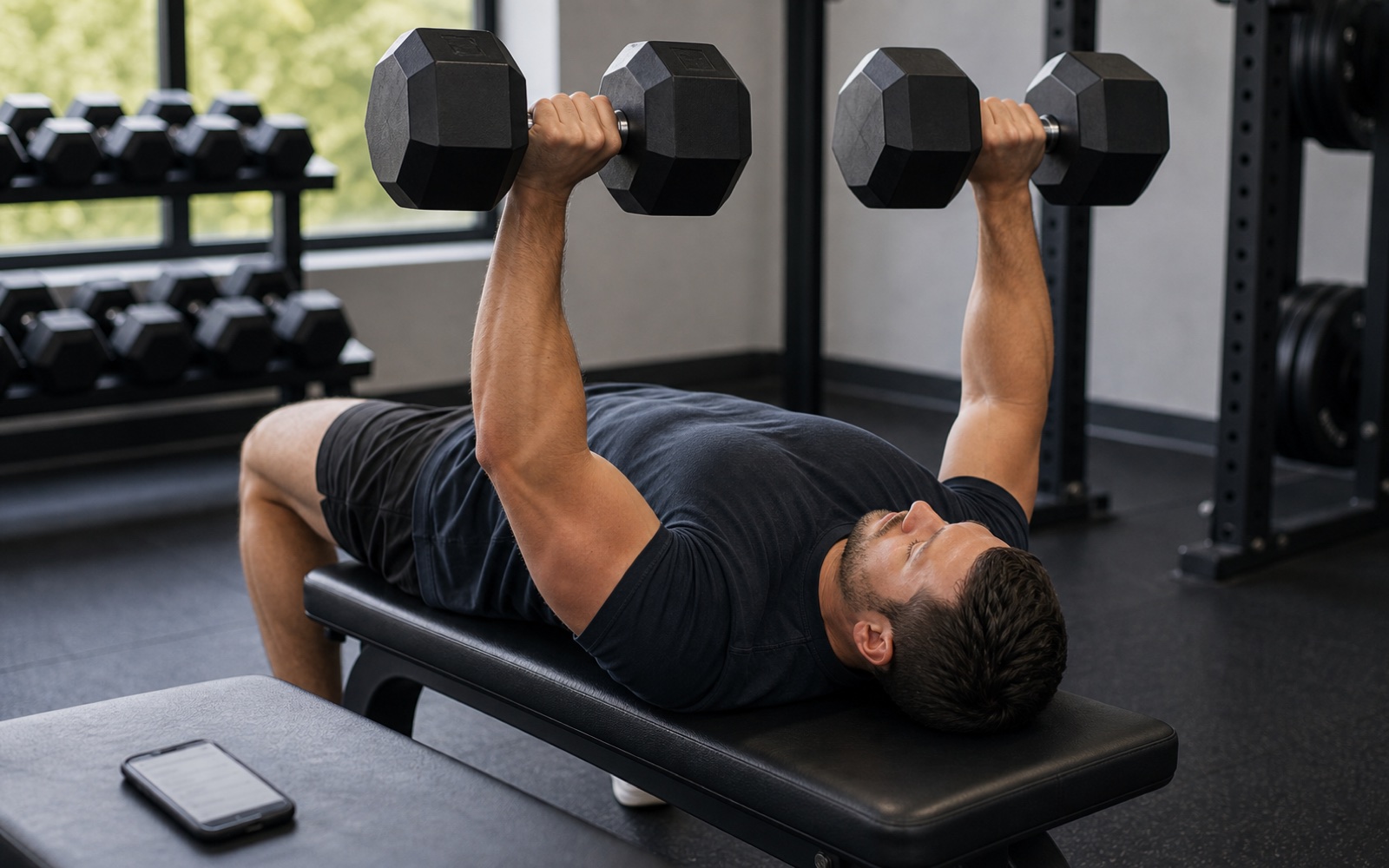
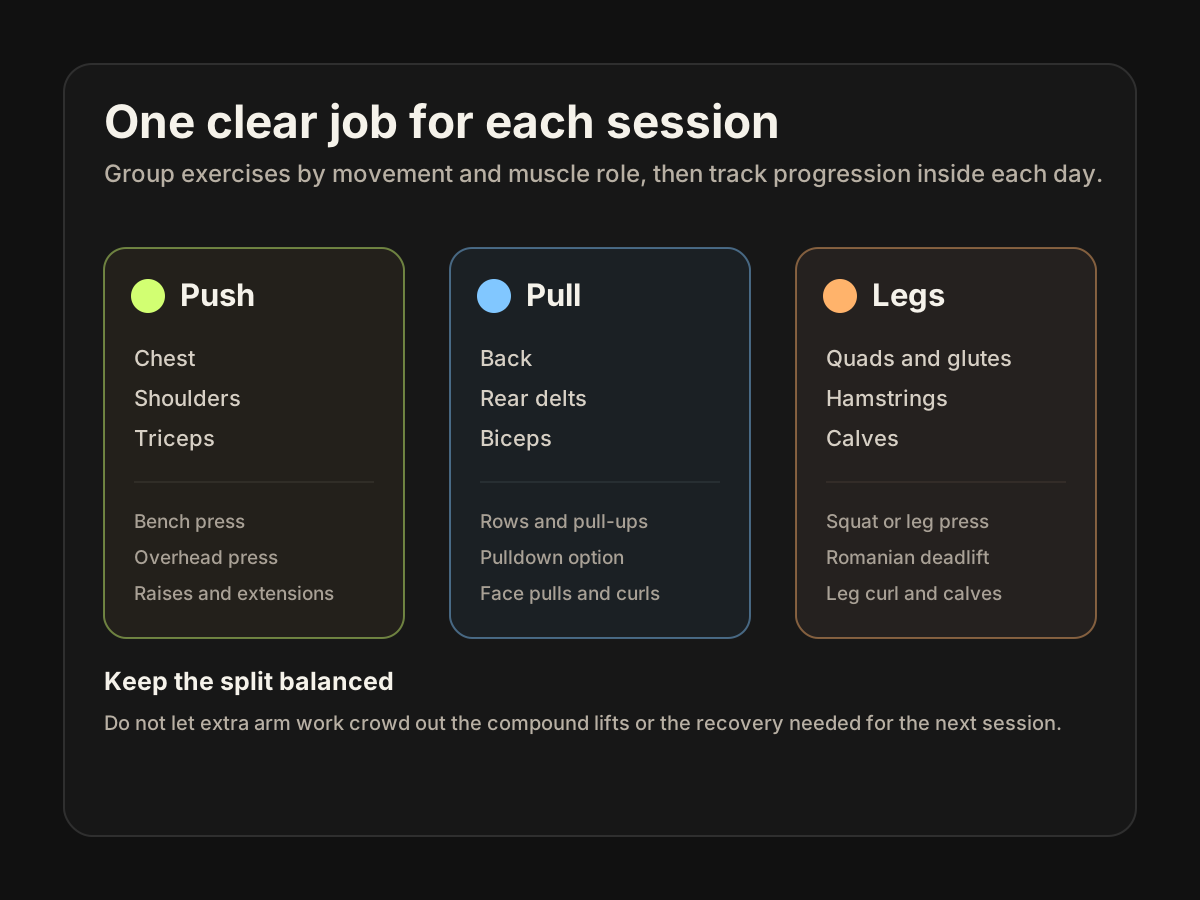
Push pull legs gives each session a clear job: presses on push day, rows and pulldowns on pull day, and lower-body work on leg day. It can be a convenient way to distribute training, but more gym days do not automatically mean more growth.
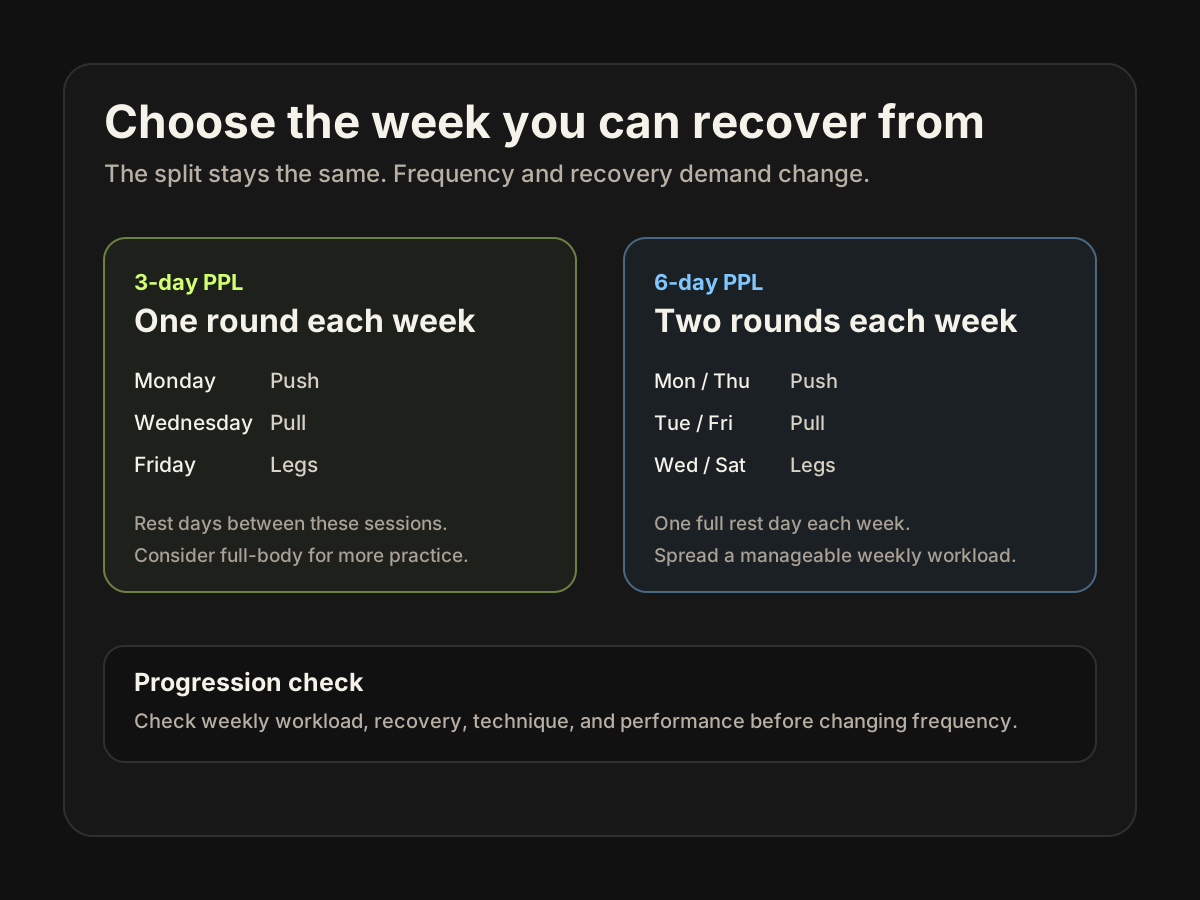
For new lifters with three available days, consider full-body training first if frequent practice matters. A three-day PPL is still an option when you prefer focused sessions, with a clear tradeoff: each group gets one dedicated session weekly.
Choose your schedule
| Schedule |
Rotation |
Dedicated sessions per muscle group |
| 3 days |
Monday push, Wednesday pull, Friday legs |
Once weekly |
| Rolling |
Push, pull, legs, rest, repeat |
Twice per eight days, averaging 1.75 times weekly |
| 6 days |
Push, pull, legs, push, pull, legs, rest |
Twice weekly |
The rolling version averages 5.25 training days per week. It is not the same as six days every week, nor a guarantee of two sessions for every muscle in each calendar week.
A 2024 meta-analysis found similar strength and muscle-growth outcomes for split and full-body routines when volume was matched. Choose the organization you can sustain; that finding does not validate every possible exercise menu.
The workout template
These are working sets after warm-ups. The same sessions can be used in any of the schedules above, but do not automatically double your current weekly workload when moving from three days to six.
| Push day |
Sets x reps |
Rest |
| Bench press |
3 x 6-8 |
2-3 min |
| Overhead press |
3 x 8-10 |
2-3 min |
| Incline dumbbell press |
3 x 10-12 |
2 min |
| Lateral raise |
3 x 12-15 |
1-2 min |
| Triceps pushdown |
3 x 10-15 |
1-2 min |
| Pull day |
Sets x reps |
Rest |
| Chest-supported row |
3 x 8-12 |
2-3 min |
| Pull-up or pulldown |
3 x 6-10 |
2 min |
| Face pull |
3 x 15-20 |
1-2 min |
| Biceps curl |
3 x 10-12 |
1-2 min |
| Leg day |
Sets x reps |
Rest |
| Back squat |
4 x 6-8 |
2-3 min |
| Romanian deadlift |
3 x 8-10 |
2-3 min |
| Leg press |
3 x 10-12 |
2 min |
| Leg curl |
3 x 12-15 |
1-2 min |
| Standing calf raise |
3 x 12-15 |
1-2 min |
The rest ranges are practical starting points. Extend them when breathing or fatigue would compromise your next set. Keep most compound sets a few reps short of failure.
Keep hinges off pull day
This version deliberately has no deadlift or Romanian deadlift on pull day. The hinge belongs on leg day, so you are not stacking it immediately before another hinge session. Chest-supported rows also reduce the need to hold a bent-over position before legs.
If conventional deadlifts are a priority, replace the Romanian deadlift on the first leg day only with 1-2 controlled sets of 5 after warm-ups. Do not add deadlifts on top. Increase that fixed-rep lift only after all prescribed reps are controlled; otherwise repeat or reduce the load. Omit the leg press that day if the session is too demanding.
A lower-volume starting option
For a newer lifter who already knows the movements, use this shorter version once weekly per session type:
| Day |
Exercises |
Working sets |
| Push |
Bench press, overhead press, triceps pushdown |
2 per exercise |
| Pull |
Chest-supported row, pulldown, curl |
2 per exercise |
| Legs |
Squat, Romanian deadlift, calf raise |
2 per exercise |
Use the rep ranges above and manageable loads. This is an entry option, not a claim of universal safety. Add work only after several sessions show that your technique and recovery are consistent.
Three-day PPL does not meet the all-major-muscles twice-weekly frequency encouraged in ACSM’s public guidance. That does not make it useless, but it is a reason to compare a two- or three-day full-body plan rather than calling PPL the default beginner choice.
Moving from three days to six
Start by distributing existing weekly sets, not copying a full session twice. For example, six weekly chest sets can become three on each push day. This keeps frequency and volume from both jumping at once.
The full table repeated twice gives 12 chest-pressing sets, 12 row/pull-up sets, and 14 squat/leg-press sets weekly, plus other work. These are substantial amounts, not minimums. Count overlapping exercises and consider removing a press or leg accessory before adding more.
Progress each lift separately
Use double progression on the listed rep ranges:
- Keep the same load while building toward the upper end.
- Once every set reaches the upper end with consistent technique and some reps left, try a small increase.
- At the new load, aim to remain inside the range. If you fall below it, use a smaller jump or return to the previous load.
- Hold steady when performance is uneven. Review recovery before adding sets to a stalled exercise.
For 3 x 8-12 rows, 12, 12, 12 may earn an increase; 12, 10, 9 does not require one. A notebook is enough to track these decisions.
Recovery and substitutions
If the second leg day repeatedly suffers, remove a leg-press set or reduce hinge work. A lighter week is another option for persistent fatigue, not an obligation every few weeks.
Use a machine chest press instead of bench, pulldowns instead of pull-ups, or a goblet squat instead of back squat when those fit your equipment and skill. Learn the substitute and choose a new load; similar muscles do not make two exercises interchangeable.
Stop an exercise that causes pain. Persistent or worsening symptoms deserve qualified assessment, not just a scheduled deload. Mayo Clinic technique guidance
If six days are hard to sustain, four-day upper/lower is a practical alternative. Either split can prioritize strength or muscle growth; the split name does not determine the outcome.