A three-day barbell plan can give beginners a simple place to start: a short list of lifts, regular practice, and an obvious next workout. This version uses fewer working sets than 5x5, so there is less work to manage while learning the movements.
The exercise choices matter, but so does keeping them repeatable. Start with manageable weights, finish controlled reps, and increase the challenge as your ability improves.
The 3-day beginner strength workout
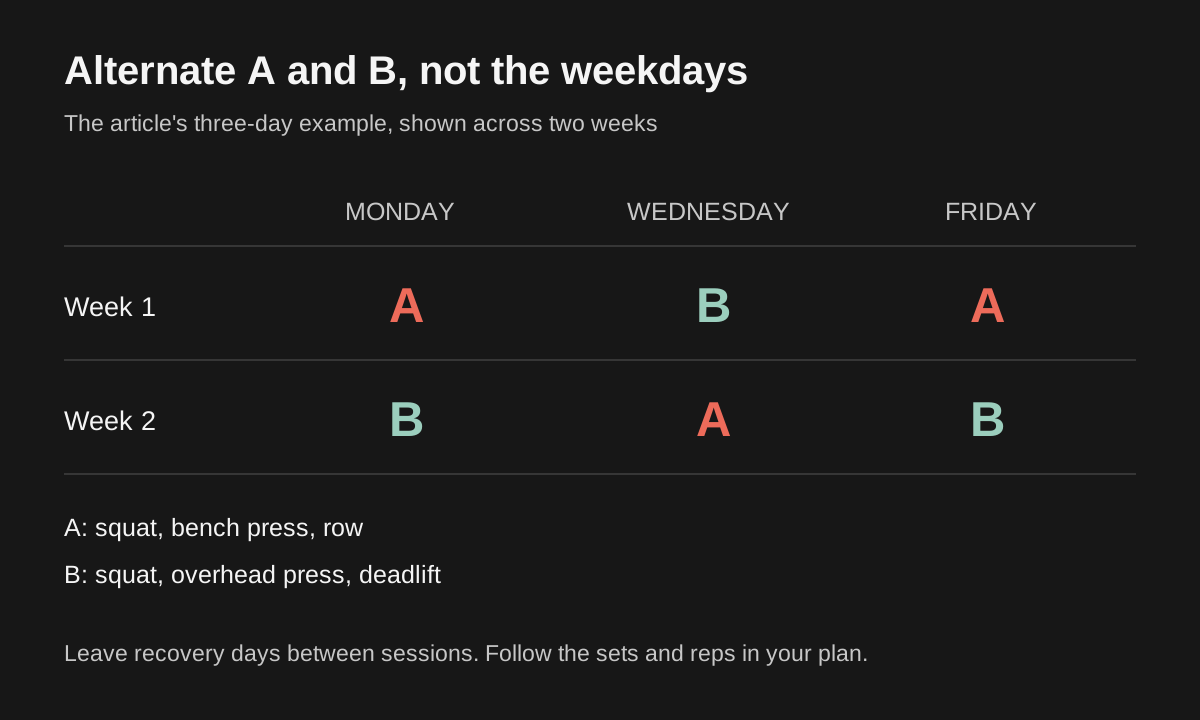
Train on three non-consecutive days, such as Monday, Wednesday, and Friday. Alternate A and B each session:
| Week |
Monday |
Wednesday |
Friday |
| Week 1 |
Workout A |
Workout B |
Workout A |
| Week 2 |
Workout B |
Workout A |
Workout B |
| Workout A |
Working sets x reps |
Rest |
| Barbell back squat |
3 x 5 |
3 min |
| Barbell bench press |
3 x 5 |
3 min |
| Barbell row |
3 x 5 |
2 min |
| Plank, optional |
3 x 30-45 sec |
60 sec |
| Workout B |
Working sets x reps |
Rest |
| Barbell back squat |
3 x 5 |
3 min |
| Overhead press |
3 x 5 |
3 min |
| Conventional deadlift |
1 x 5 |
3-5 min after last warm-up |
| Hanging knee raise, optional |
3 x 8-12 |
60 sec |
Warm-up sets do not count toward the working sets. The rest times are starting points: take longer if breathing or fatigue would compromise the next set.
What the schedule covers
Squats appear three times a week. Bench, rows, overhead press, and deadlift each appear three times across two weeks, not twice in every week. In B/A/B weeks, chest pressing appears only once.
That is a real limitation of this minimalist template. ACSM’s public summary encourages training all major muscle groups at least twice weekly. Three gym visits alone do not establish that coverage. For a more balanced general routine, choose exercises for each major muscle group on at least two days instead of assuming overhead press replaces chest work.
First-week setup
- Choose a weight you could lift for several more controlled reps than the target. An empty bar may work; use a lighter bar, dumbbells, or a machine if it is too heavy.
- Complete Workout A, rest a day, then complete Workout B.
- Note the load and actual reps for each lift. A notebook is enough.
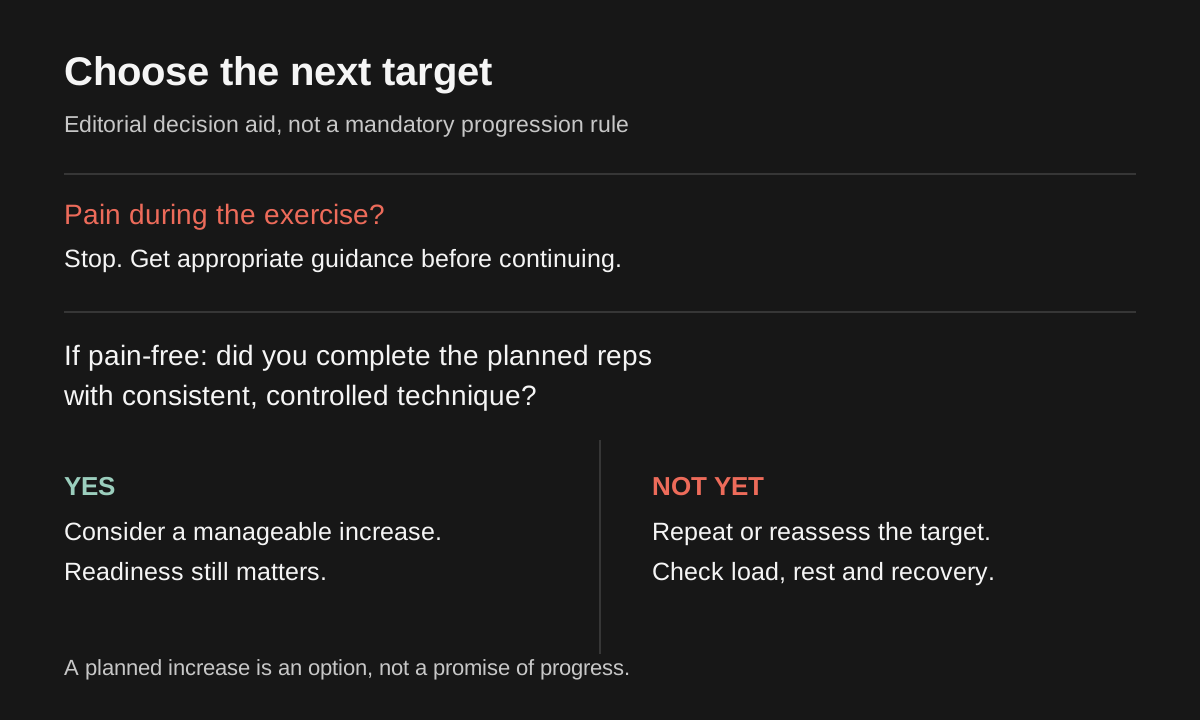
- Increase a lift next time only if every working set was completed with consistent technique and some effort left in reserve.
You do not need to test your one-rep max. ACSM’s summary discusses roughly 80% of 1RM and 2-3 sets per exercise for optimizing strength, not as a compulsory novice starting dose or a specifically later-stage rule. Starting light here is our practical choice for learning the lifts.
When to add, repeat, or reduce weight
| What happened |
Next time |
| All 3 x 5 completed with controlled technique |
Try the smallest manageable load increase |
| Deadlift 1 x 5 completed with control |
Apply the same small-increase rule |
| A rep was missed, without pain |
Repeat the load; check rest and starting effort |
| Repeated misses on the same lift |
Reduce that lift enough to recover controlled reps, then rebuild |
| Several lifts decline together |
Check sleep, workload, and recovery before increasing anything |
For example, 45 kg for 3 x 5 might become 47.5 kg next session if that jump is manageable. Smaller jumps are fine, especially on presses. A load increase is an option you earn, not an appointment you must keep.
If technique falls apart, reduce the weight immediately rather than waiting for a second failed session. Pain is a separate stop signal, not a reason to force a lighter set through symptoms.
Warm up without tiring yourself out
Begin with 5 to 10 minutes of easy movement, then use lighter sets to rehearse each main lift before its working sets. Mayo Clinic recommends warming up before lifting and reducing weight or reps when technique cannot be maintained. Mayo Clinic technique guidance
A squat warm-up might be a light bar for 5 reps, a moderate load for 3, then a load nearer the working weight for 1 or 2. Use fewer jumps for light working weights. For floor deadlifts, use light full-diameter plates or a suitable raised setup so you do not have to reach farther simply because the load is light.
Exercise substitutions
| Main lift |
Alternative |
| Back squat |
Goblet squat or leg press |
| Bench press |
Dumbbell bench, push-up, or machine chest press |
| Barbell row |
Cable row or chest-supported dumbbell row |
| Overhead press |
Dumbbell or machine shoulder press |
| Conventional deadlift |
Trap-bar deadlift or dumbbell Romanian deadlift |
These alternatives change the skill and loading demands. Learn the new movement and choose a fresh starting load. For machines, dumbbells, and bodyweight movements, a range such as 2-3 sets of 8-12 may be more practical than copying barbell 3 x 5. Build reps before adding resistance. Keep the original barbell prescription only for the lifts you retain.
How to judge whether it is working
Look for controlled reps, gradually improving loads or rep quality, and sessions you can recover from. Progress does not have to happen every workout. A repeat session can still provide a useful stimulus.
Keep the optional core work optional. Do not keep adding accessories because one session felt easy. Equally, if the empty-bar version is already exhausting, begin with fewer working sets and build up gradually.
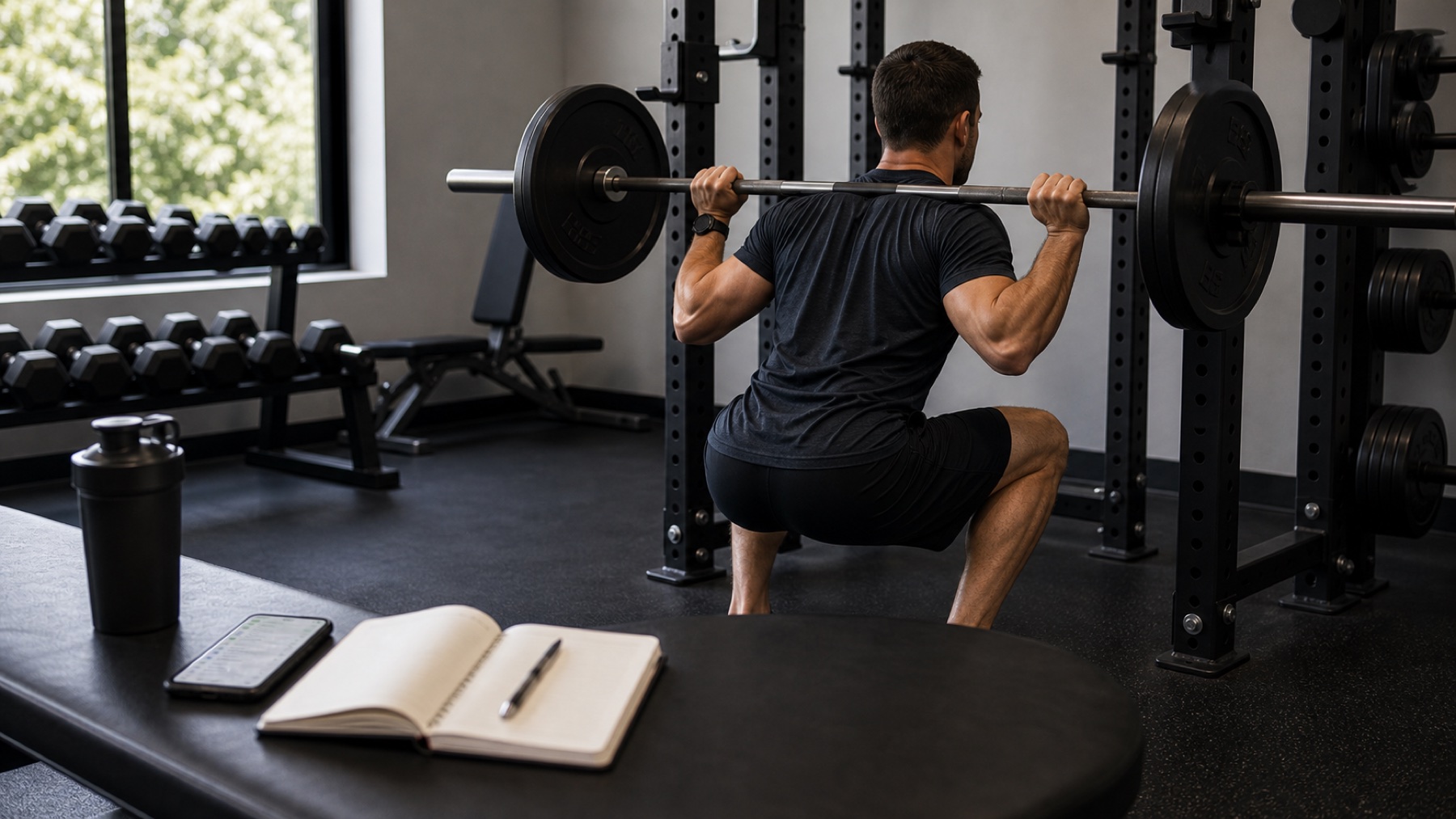
Use rack safeties for squats and bench presses, and get help learning the setup. Stop an exercise that causes pain. Persistent or worsening pain, numbness, or unexplained weakness warrants qualified assessment rather than a program reset.
Choosing another plan
| Your constraint |
Consider |
| Five working sets feel excessive |
Stay with a lower-set plan like this one |
| You enjoy barbell practice and recover well from more sets |
Compare the 5x5 template |
| You want a wider exercise menu |
Compare the full-body routine |
| You can train four days and want shorter focused sessions |
Compare upper/lower |
| You train at home |
Use dumbbells, bands, or bodyweight with suitable resistance |
More days or sets are not automatically an upgrade. When repeated stalls continue despite sensible loads, rest, and recovery, adjust the progression or workload before assuming you need a harder split. If pain is the issue, resolve that first.
For the rep-range method used with substitutions, see progressive overload for beginners.